


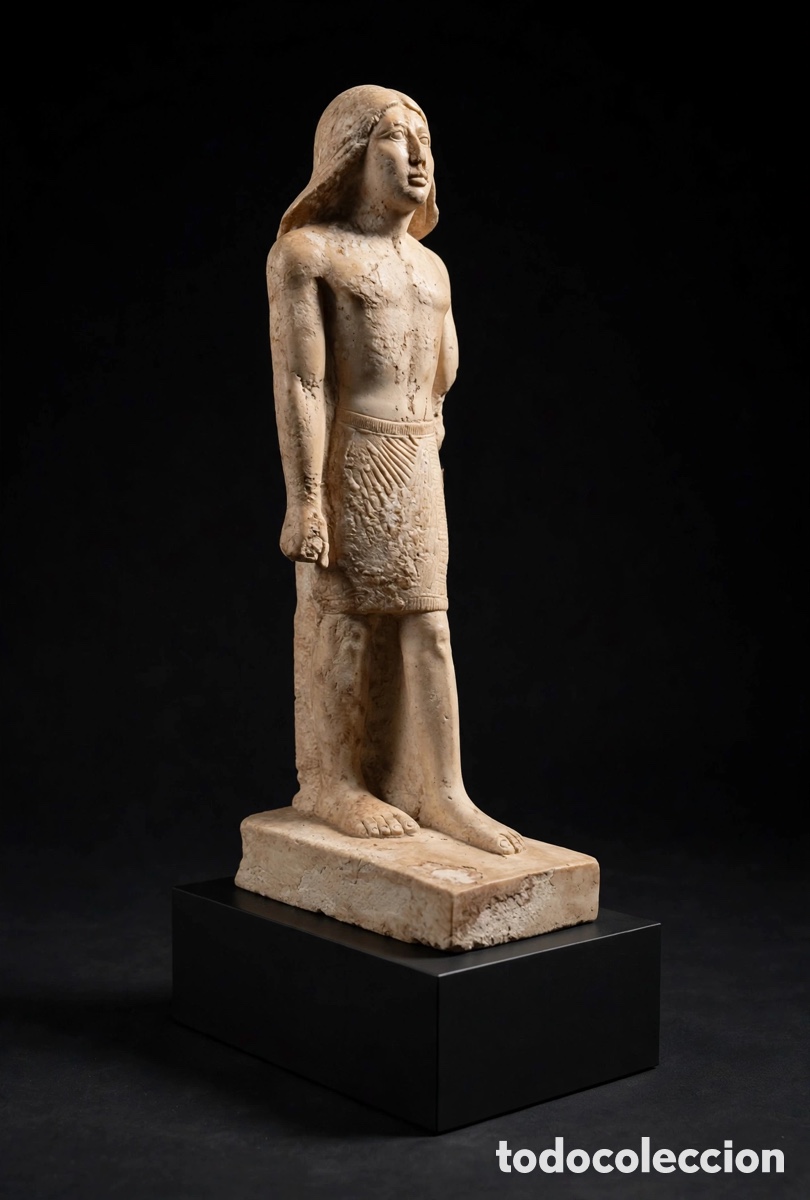
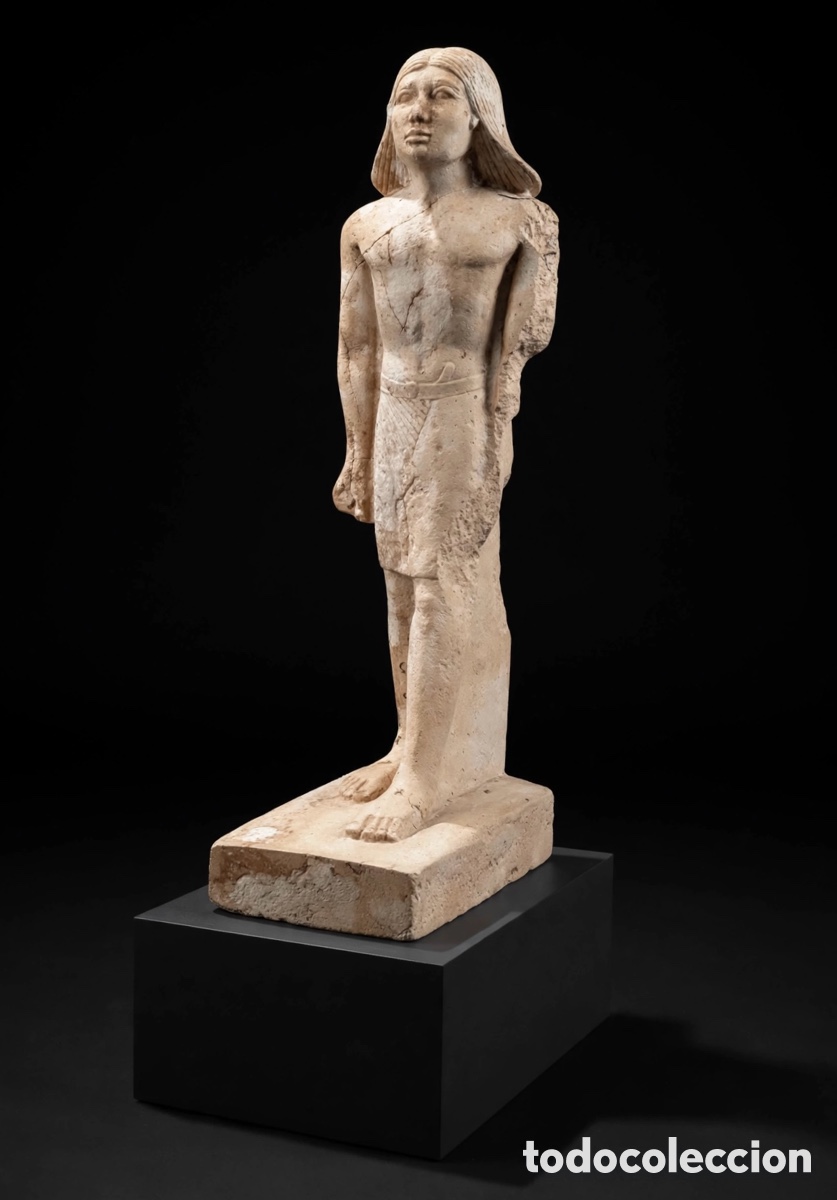
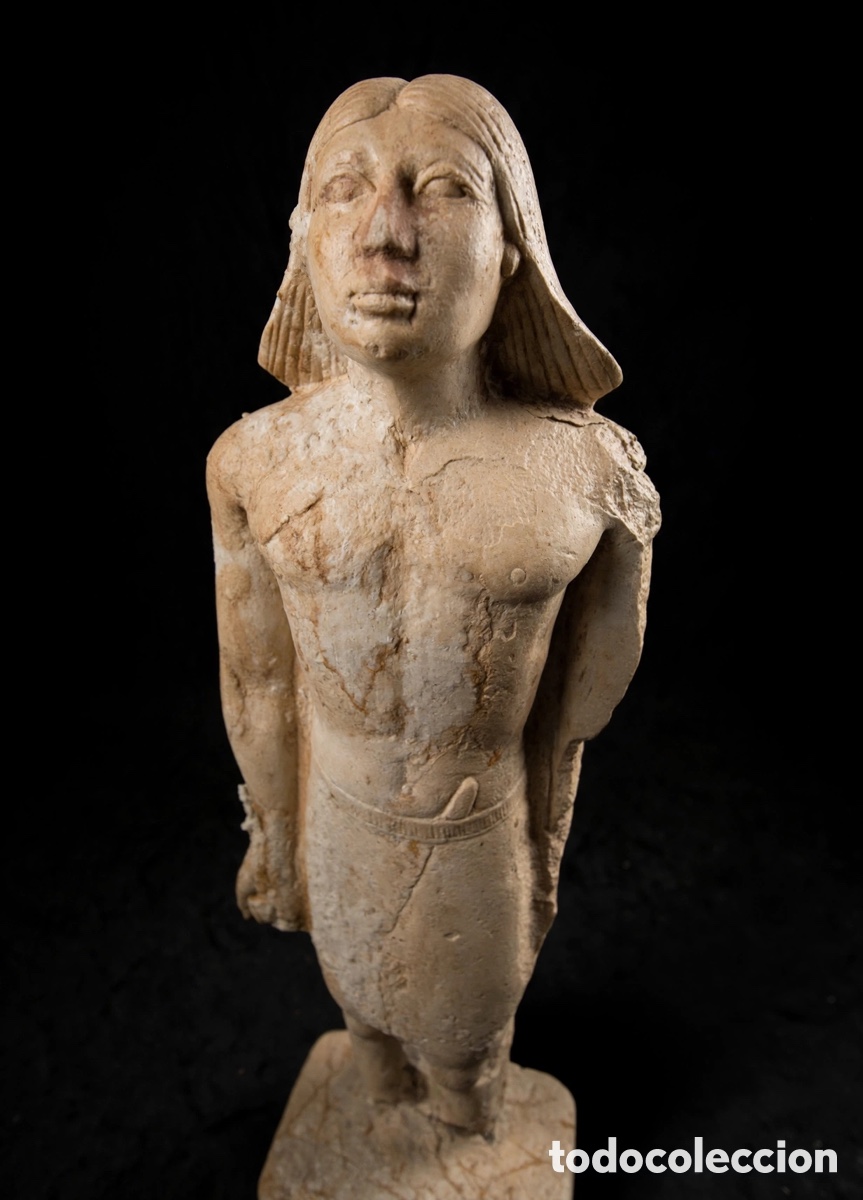
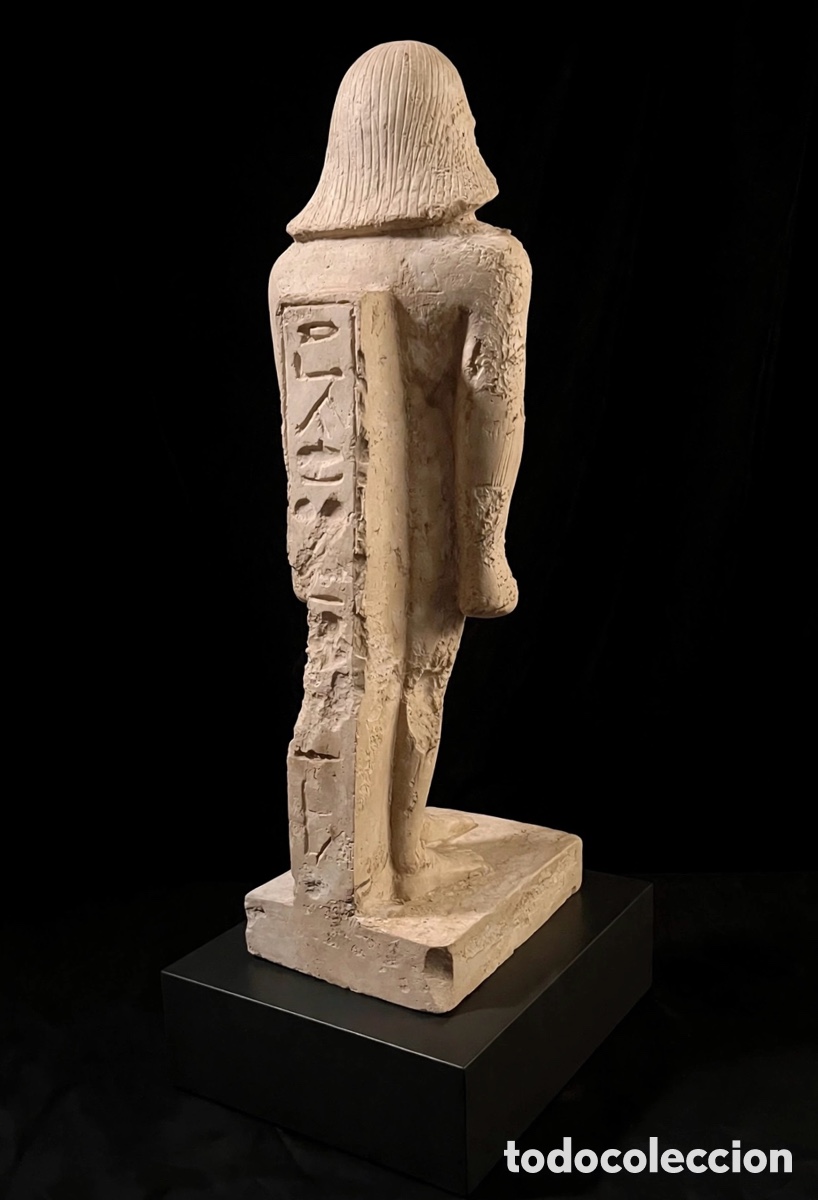
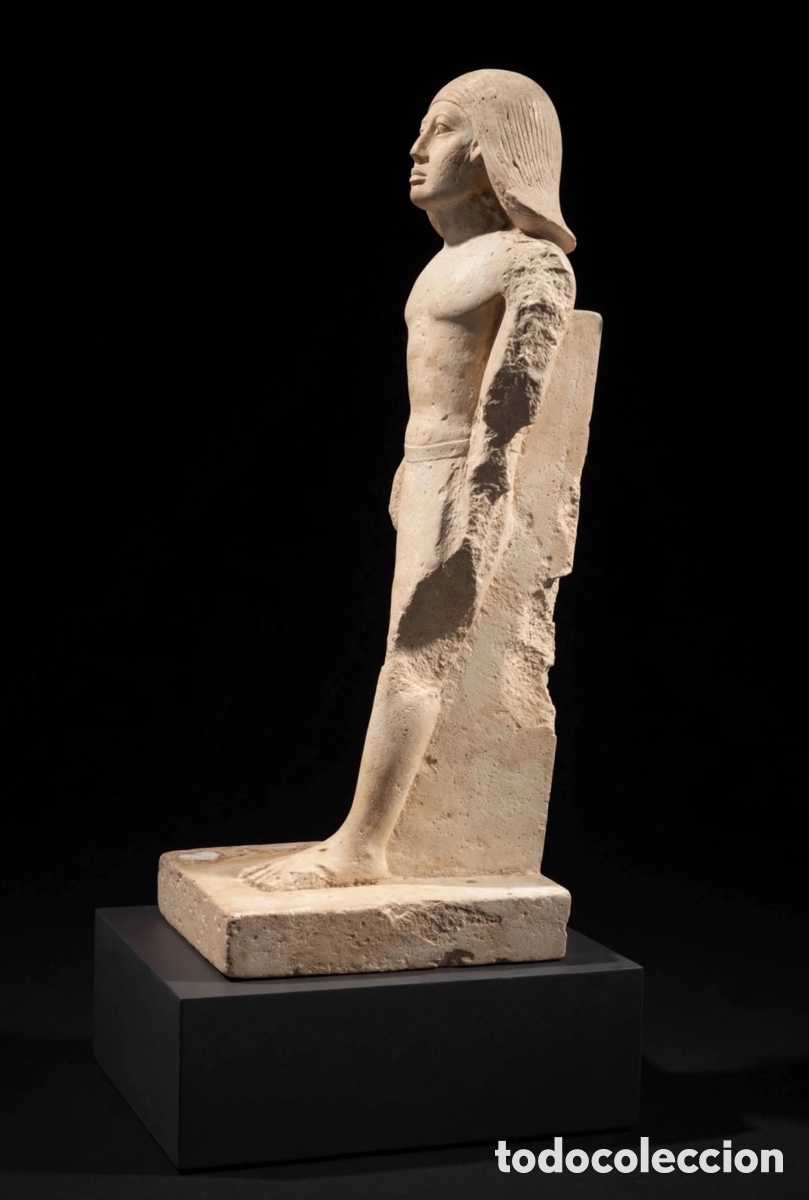
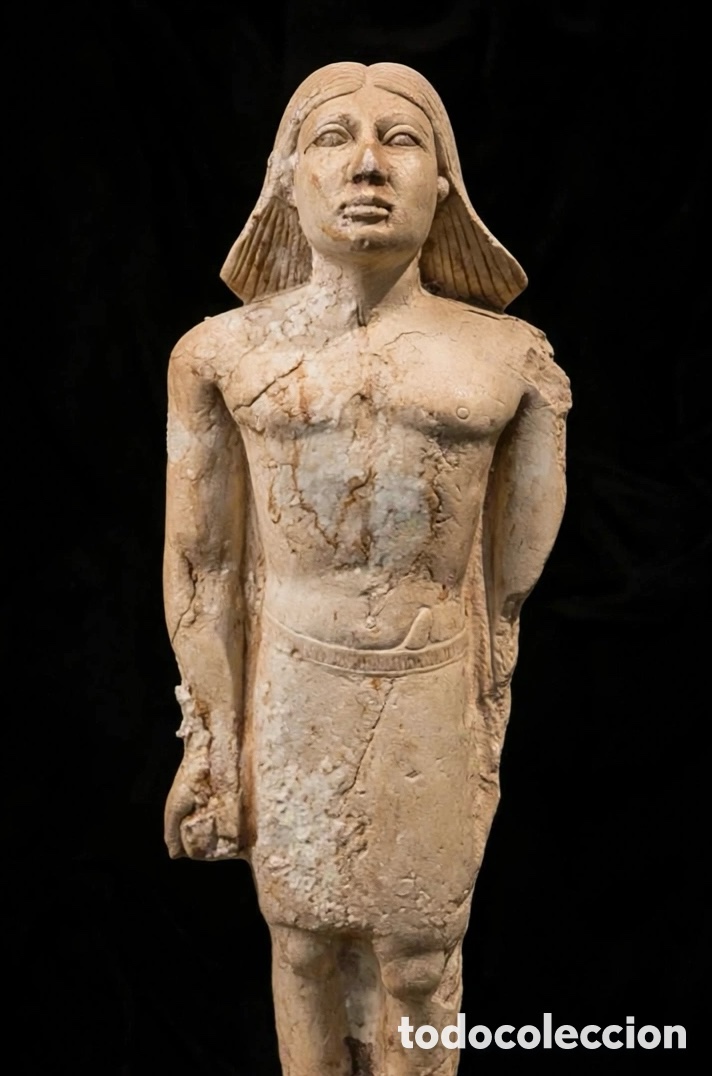
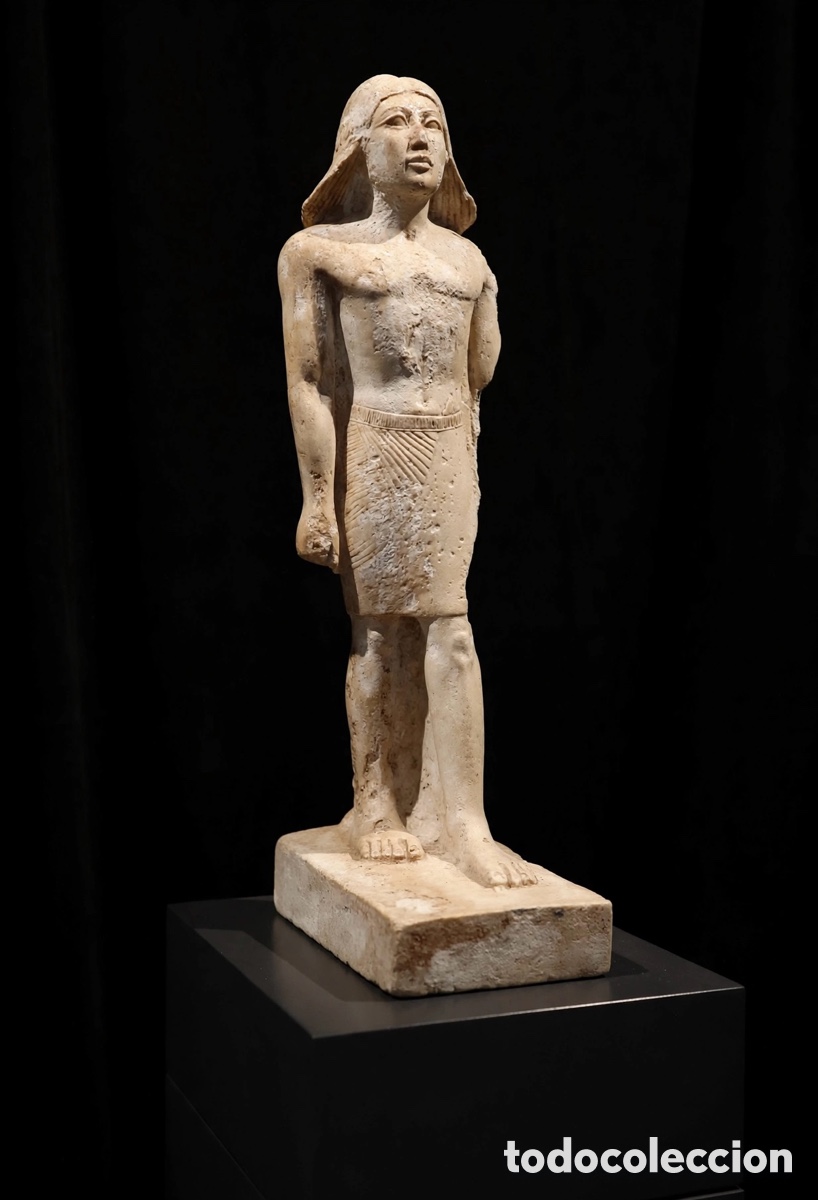
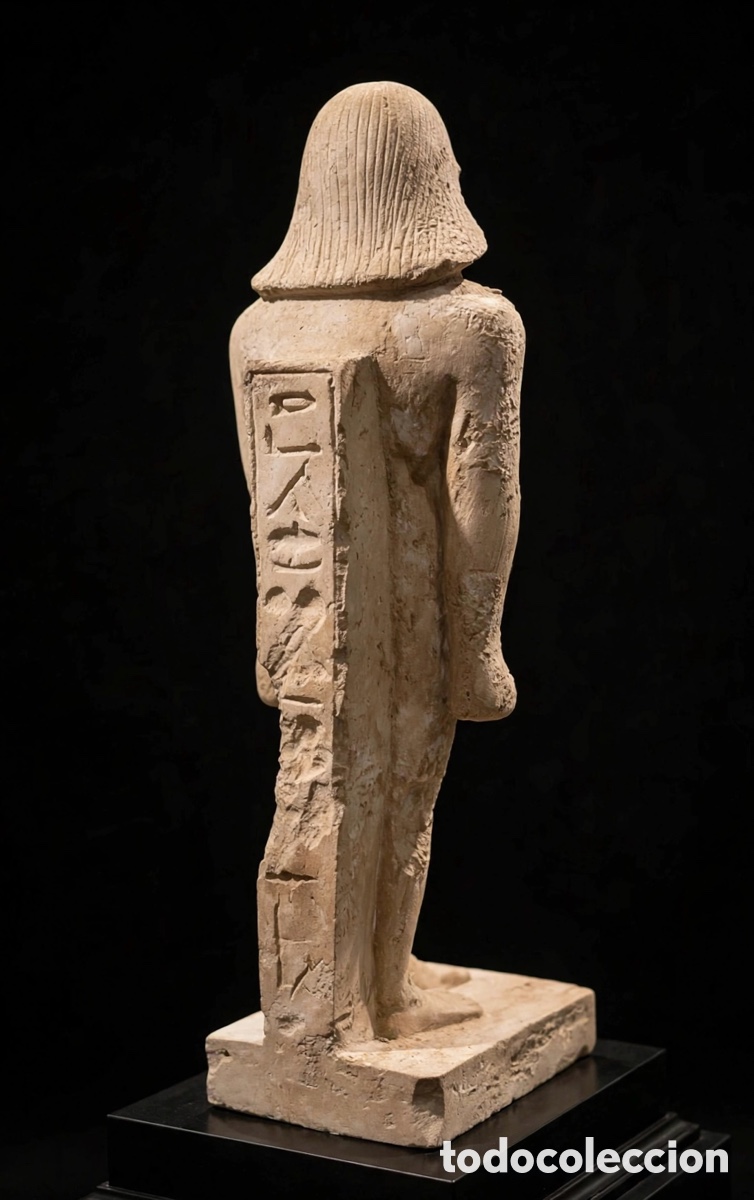
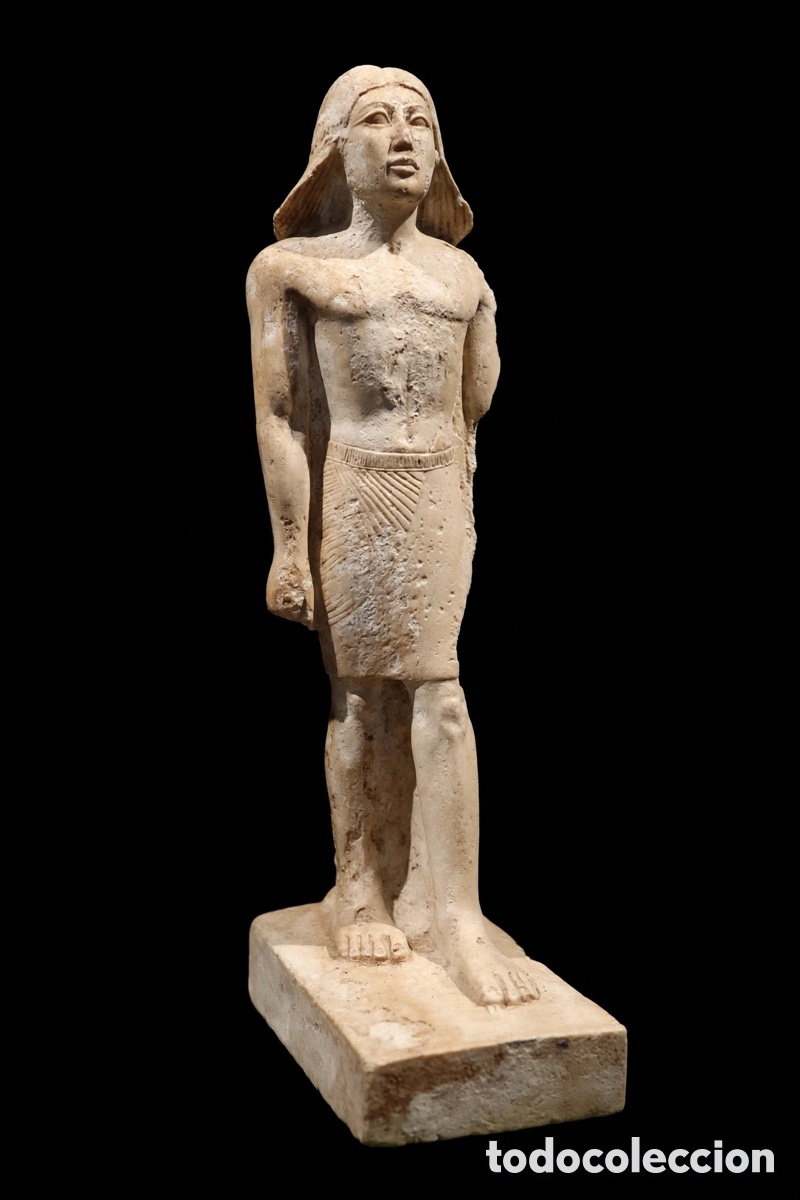
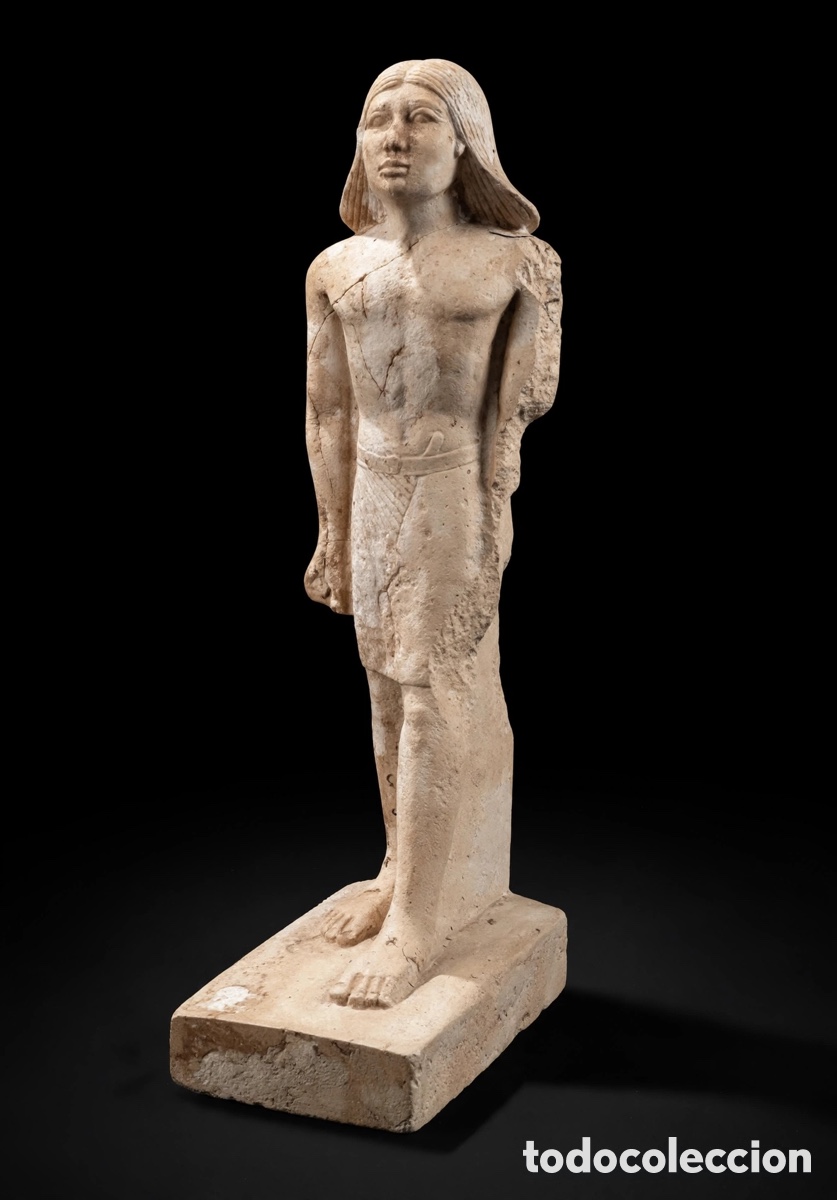
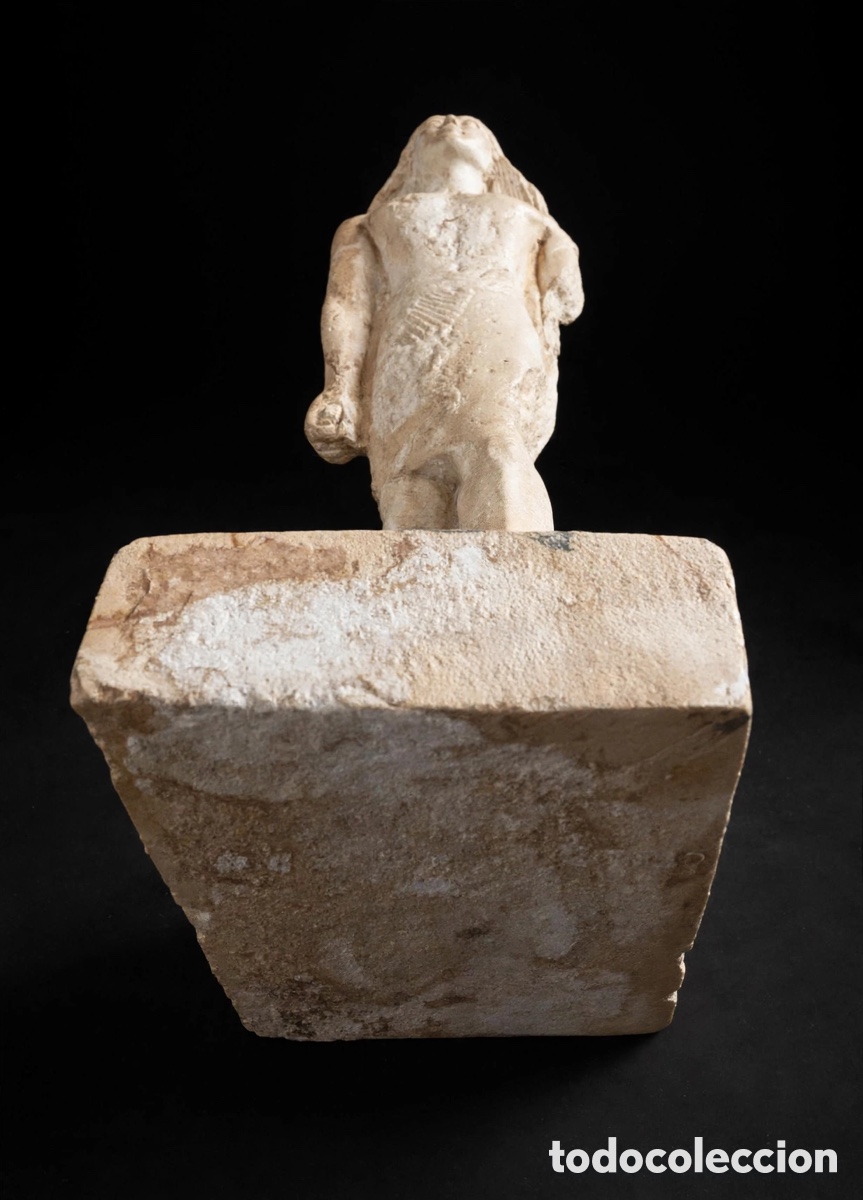
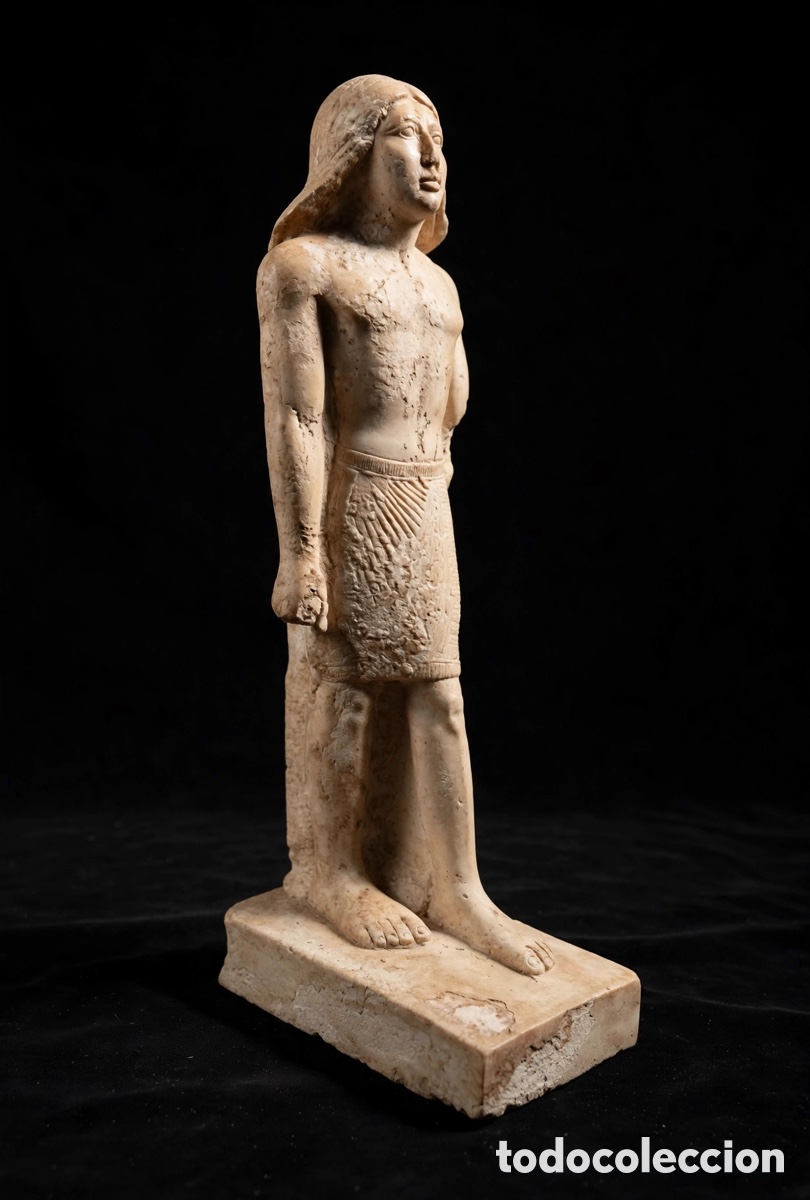
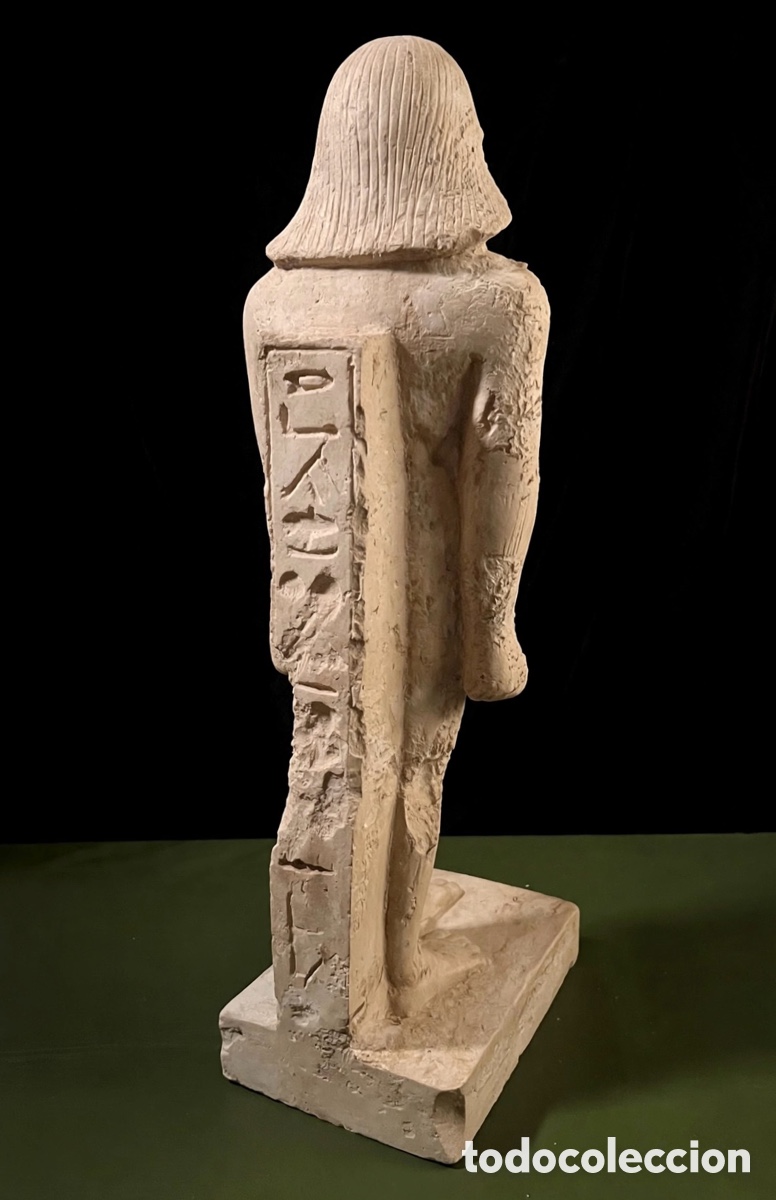
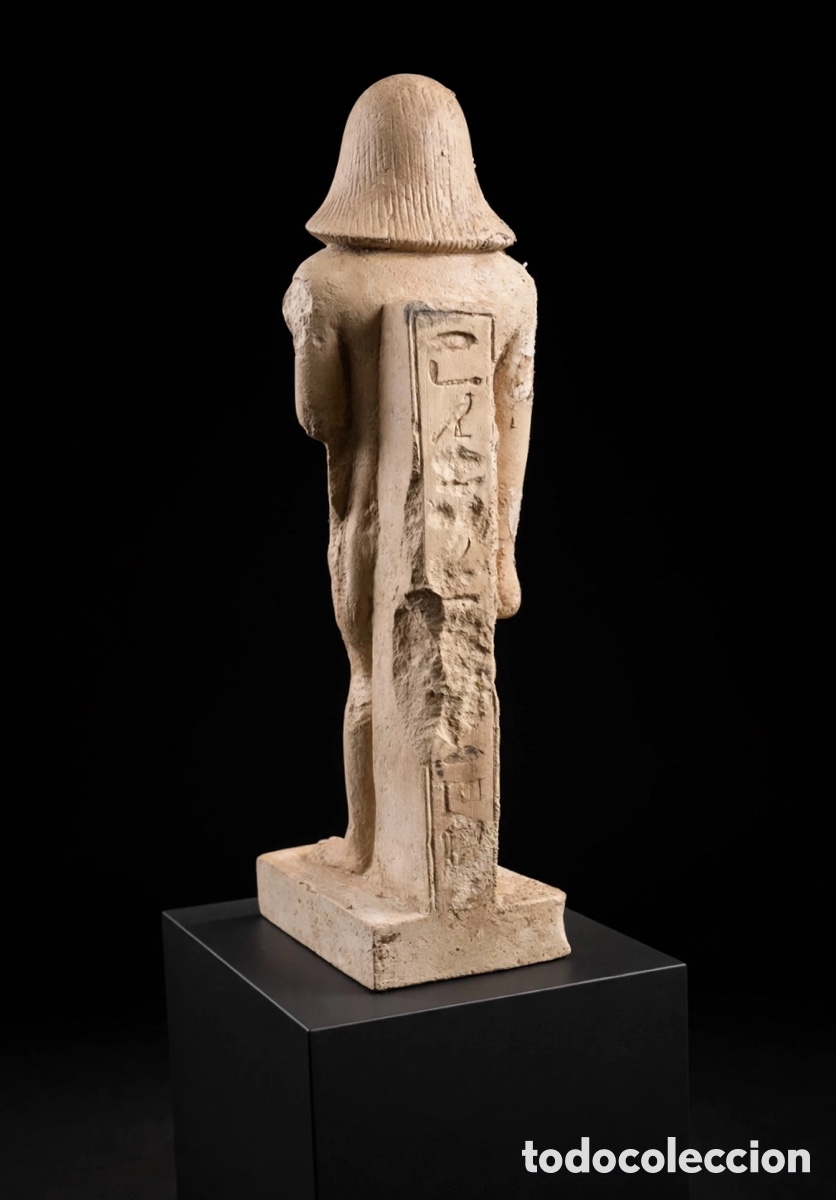
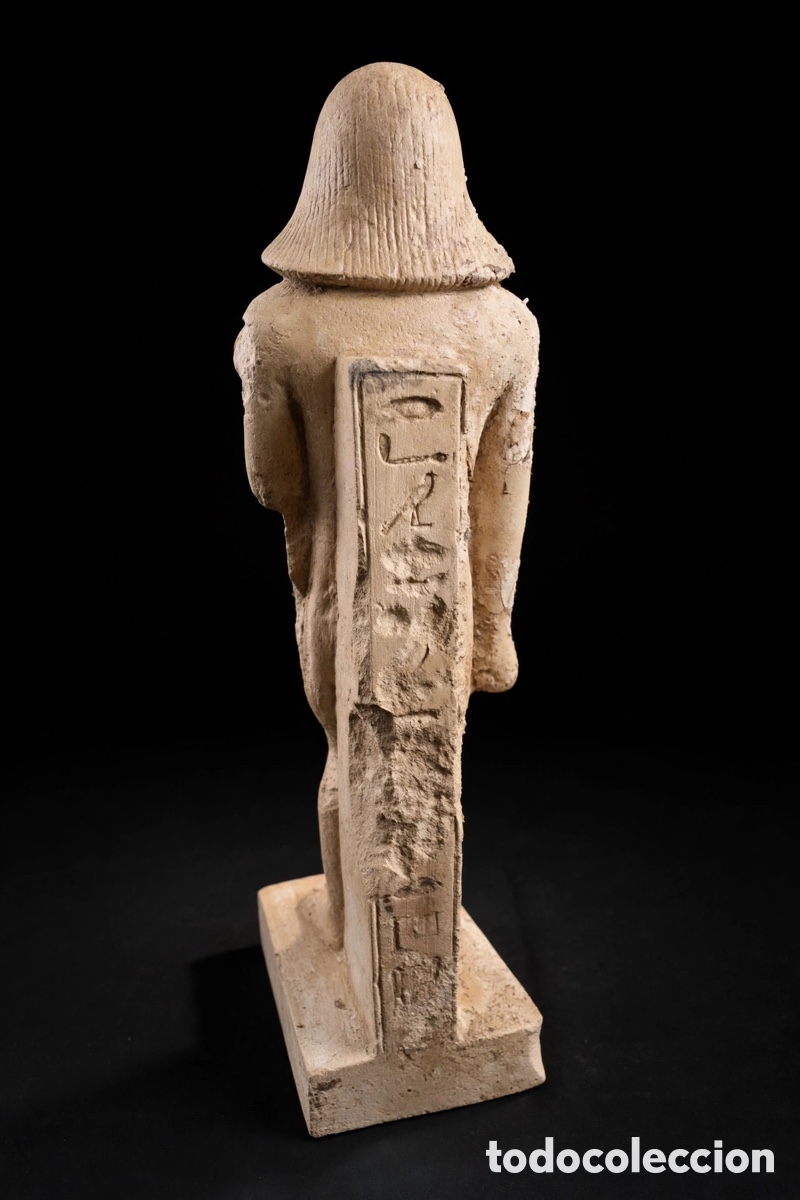
Estatuilla de un personaje joven del Egipto faraónico
Luce tocado tradicional con raya al medio
Viste la falda tradicional Shenti de la cual sobresale el mango de un puñal.
Apoyado en la columna faraónica cor fragmentos de inscripción en jeroglificos
Procedencia: Deir el Medina, orilla occidental del río Nilo, a la altura de la vieja ciudad de Tebas. (Luxor, Alto Egipto)
Material: piedra caliza
Medidas: 27 cm. de alto
Peso 1,1Kg.
Colección Privada
La vestimenta masculina, el shenti, era una prenda de vestir corta que envolvía la cintura del hombre y se sujetaba con un cinturón. Este atuendo fue utilizado por los antiguos egipcios desde el Imperio Antiguo y se caracterizaba por su sencillez y comodidad de movimiento.
La vestimenta del Antiguo Egipto reflejaba la posición social, la religión y el género de quien lo llevaba, y cada prenda, tejido y adorno tenía su propio significado.
El peinado con raya al medio en el antiguo Egipto era una característica distintiva que simbolizaba estatus social y belleza.
Statuette of a figure from Pharaonic Egypt
Wears a traditional headdress with a center part
Wears the traditional shenti skirt from which the handle of a dagger protrudes.
Reclining against a pharaonic column with fragments of hieroglyphic inscription
Provenance: Deir el-Medina, west bank of the Nile River, near the ancient city of Thebes (Luxor, Upper Egypt)
Material: Limestone
Measurements: 27 cm tall
Weight: 1.1 kg
Private Collection
The shenti, a short garment worn by men, was wrapped around the waist and fastened with a belt. This attire was used by the ancient Egyptians from the Old Kingdom onward and was characterized by its simplicity and ease of movement.
Clothing in Ancient Egypt reflected the social standing, religion, and gender of the wearer, and each garment, fabric, and adornment had its own specific meaning.
The middle-parted hairstyle in ancient Egypt was a distinctive feature that symbolized social status and beauty.

Espanha (Málaga)


 Español
 English
 Deutsch
 Français
 Português
 Italiano