


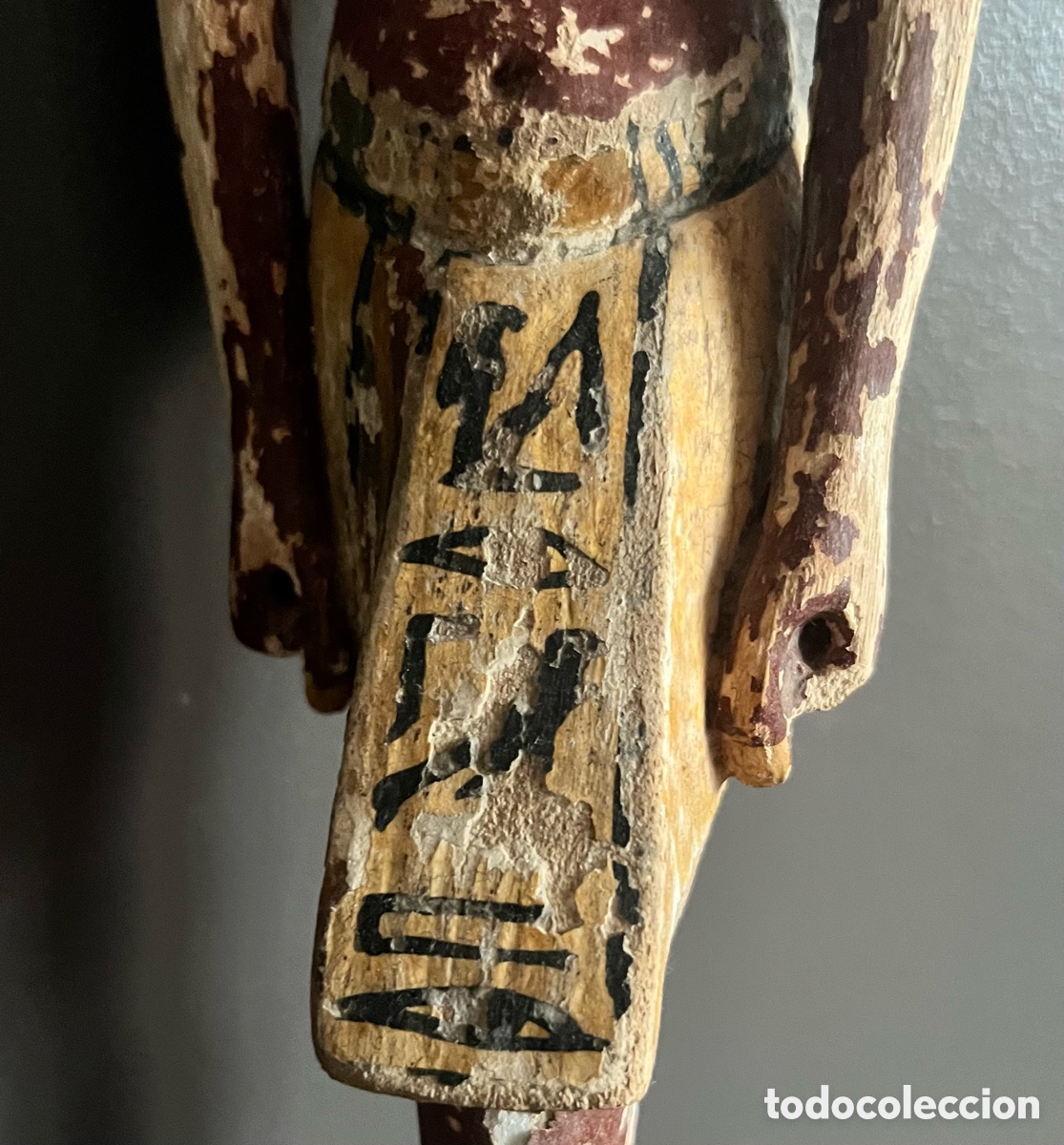
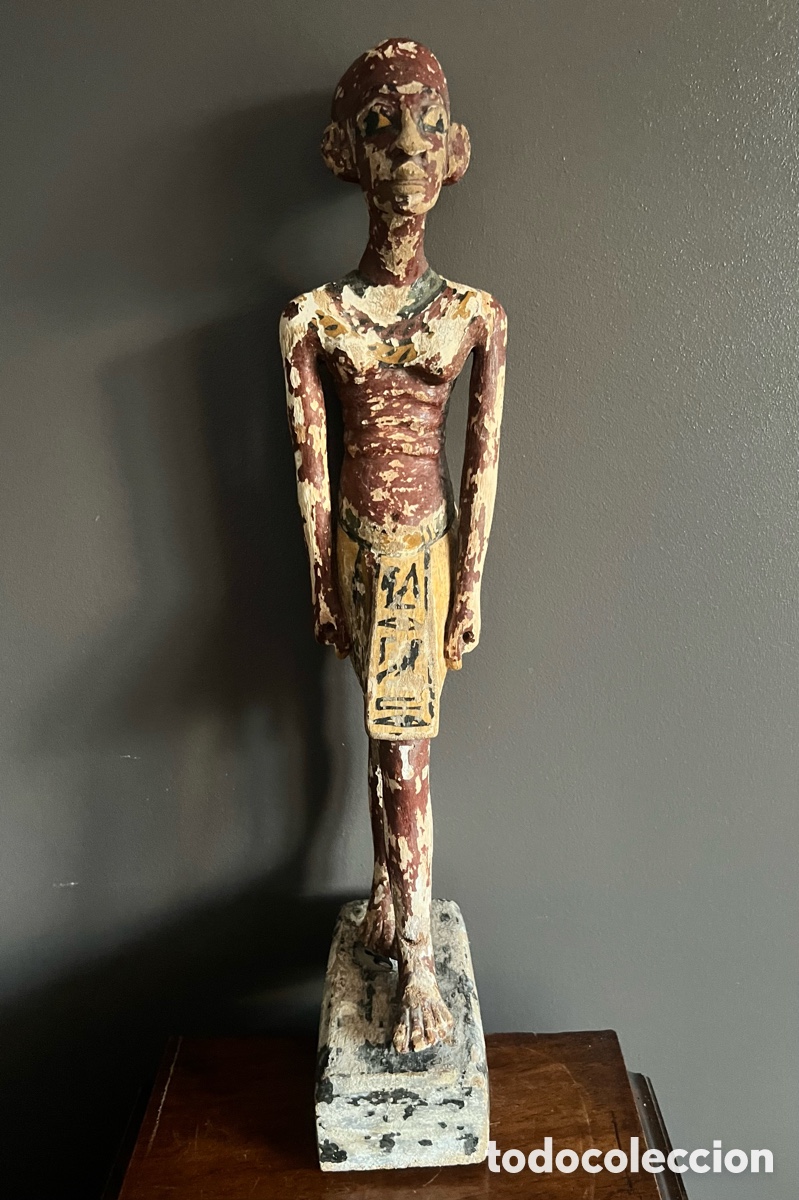
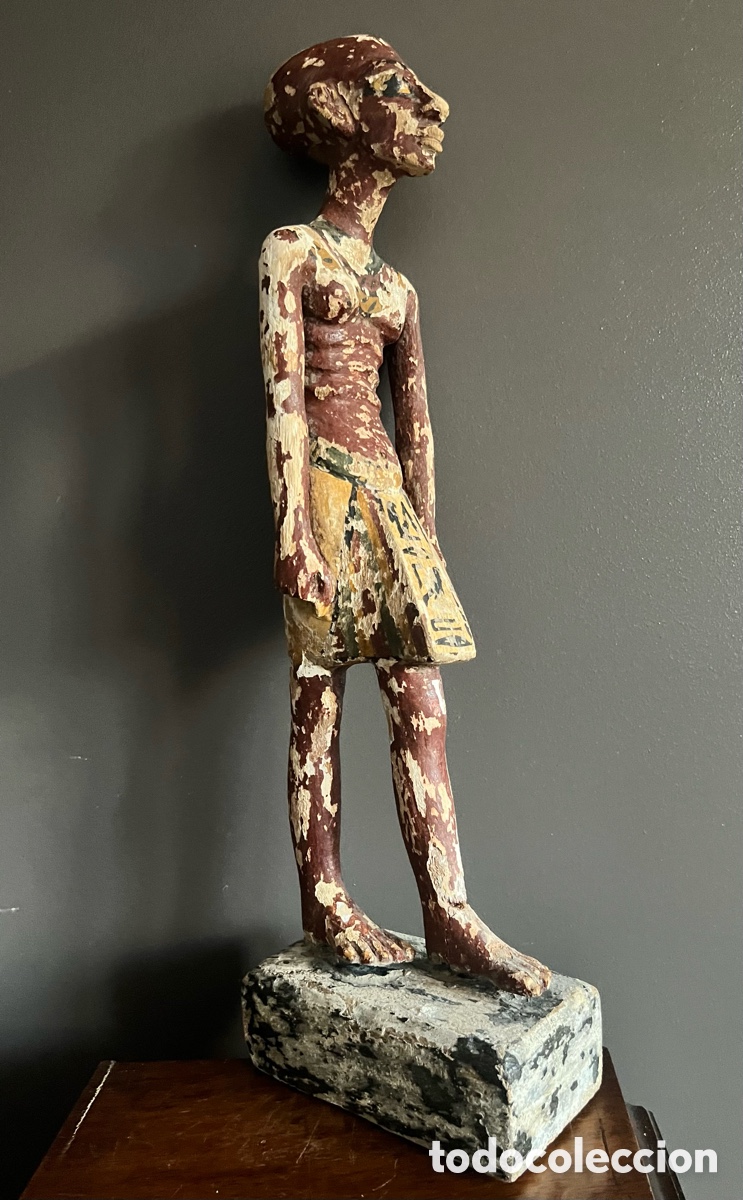
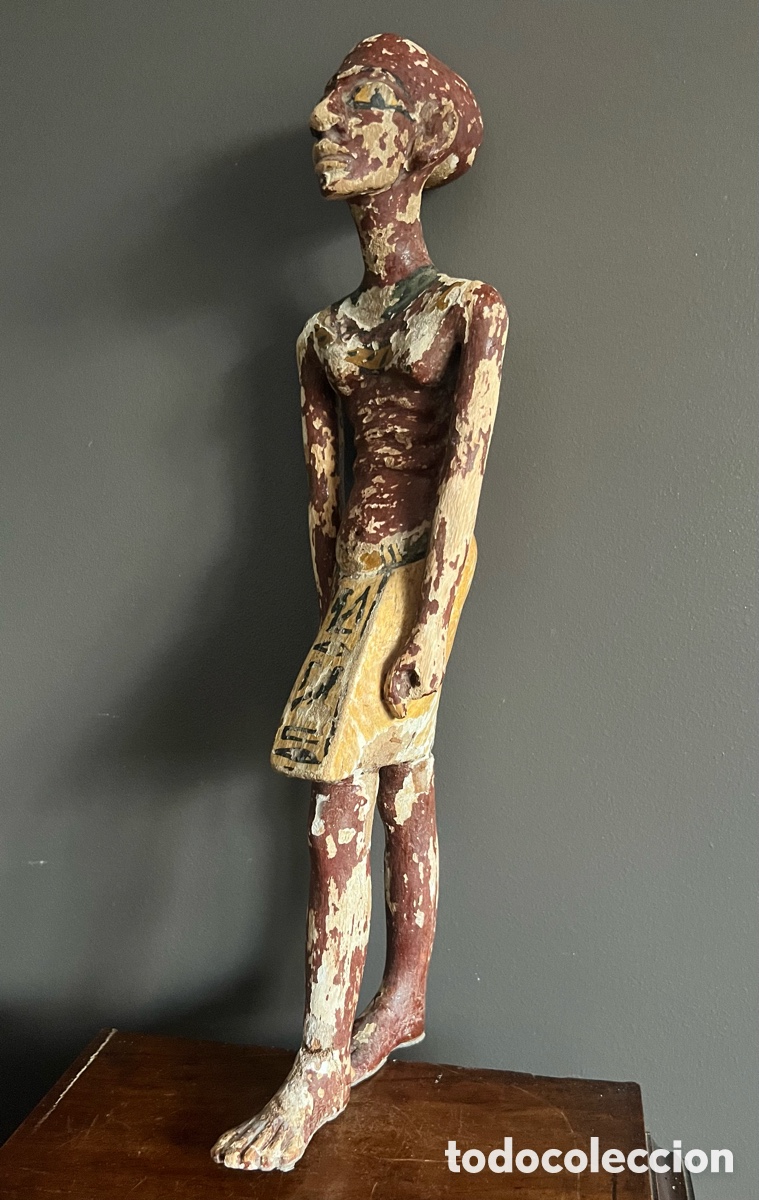
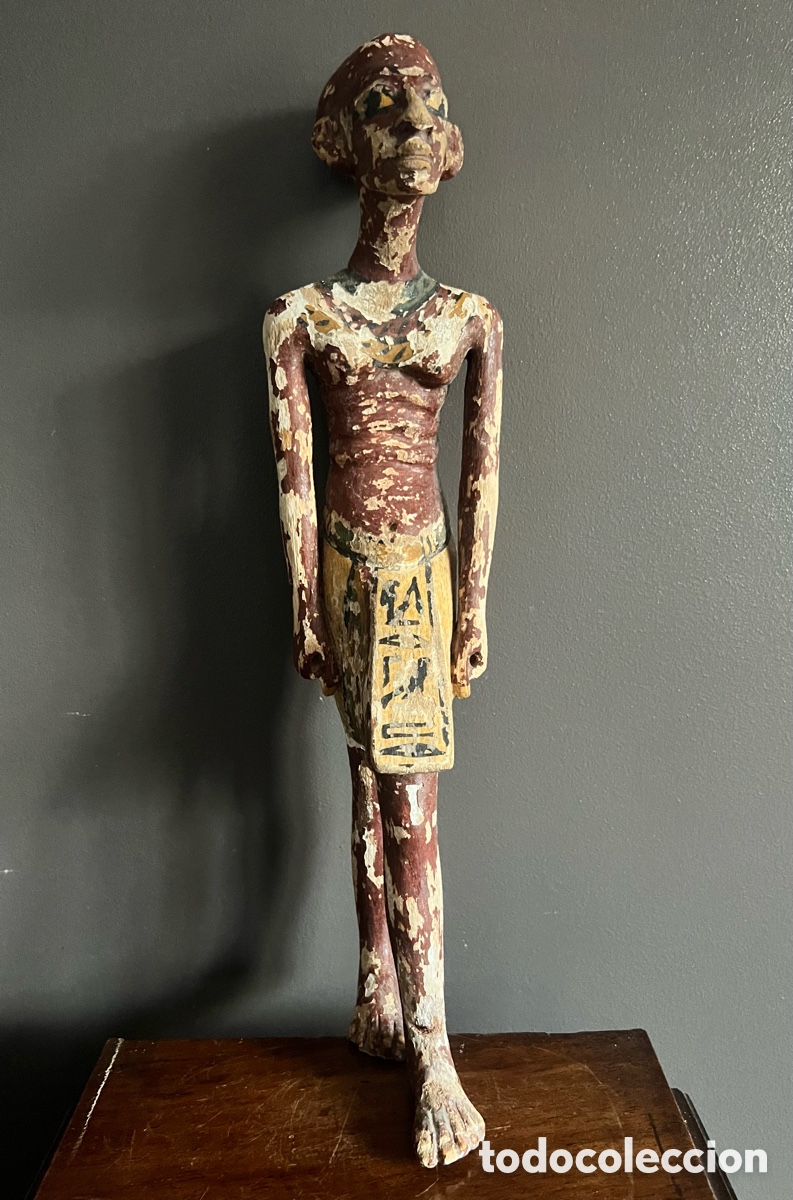
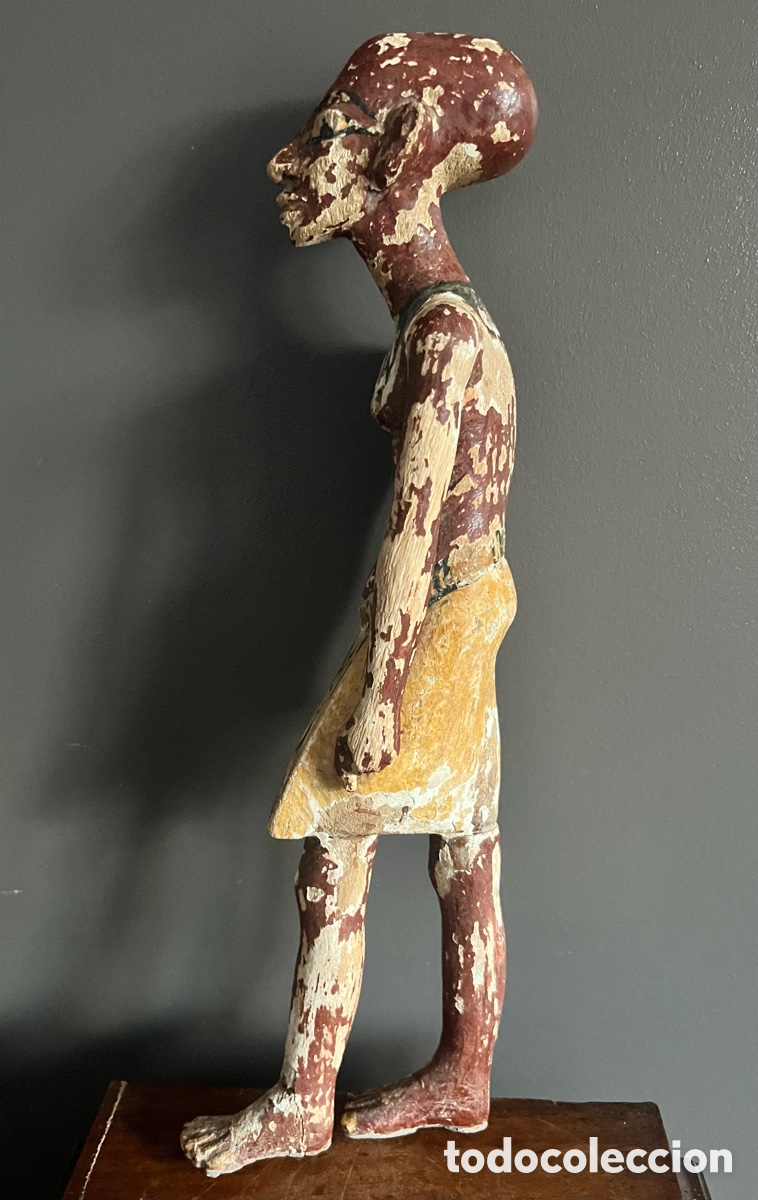
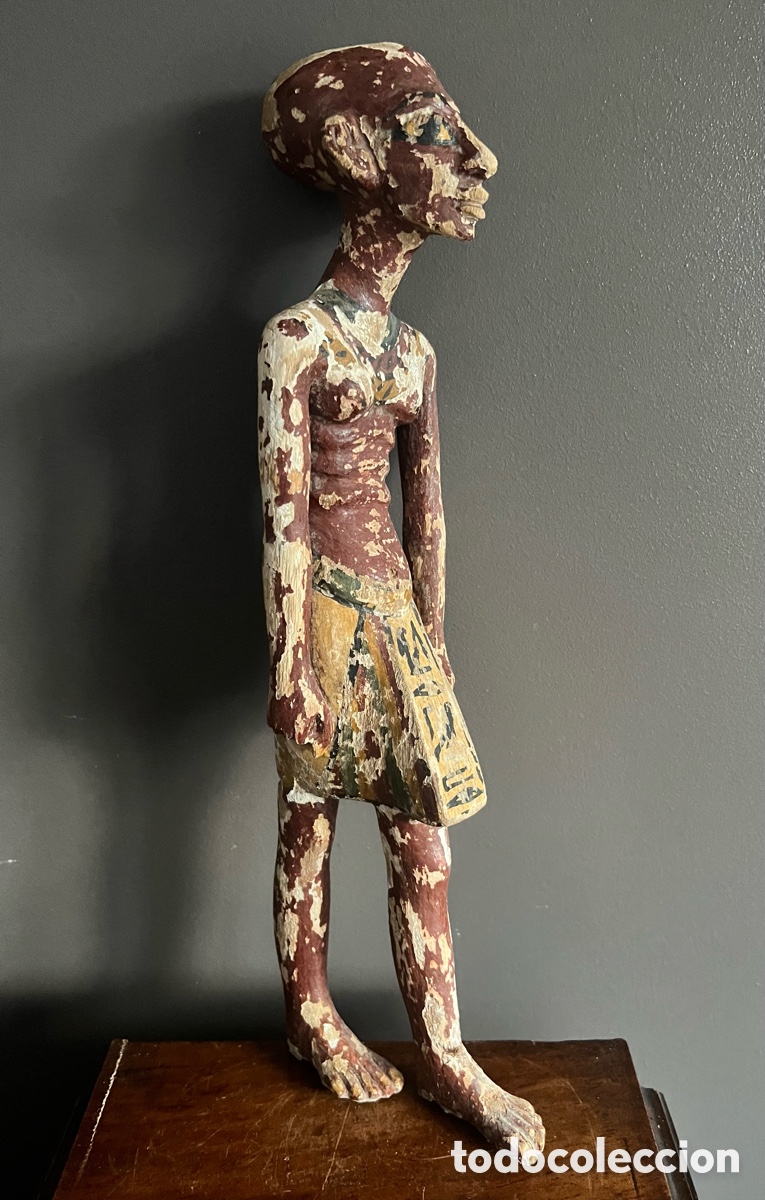
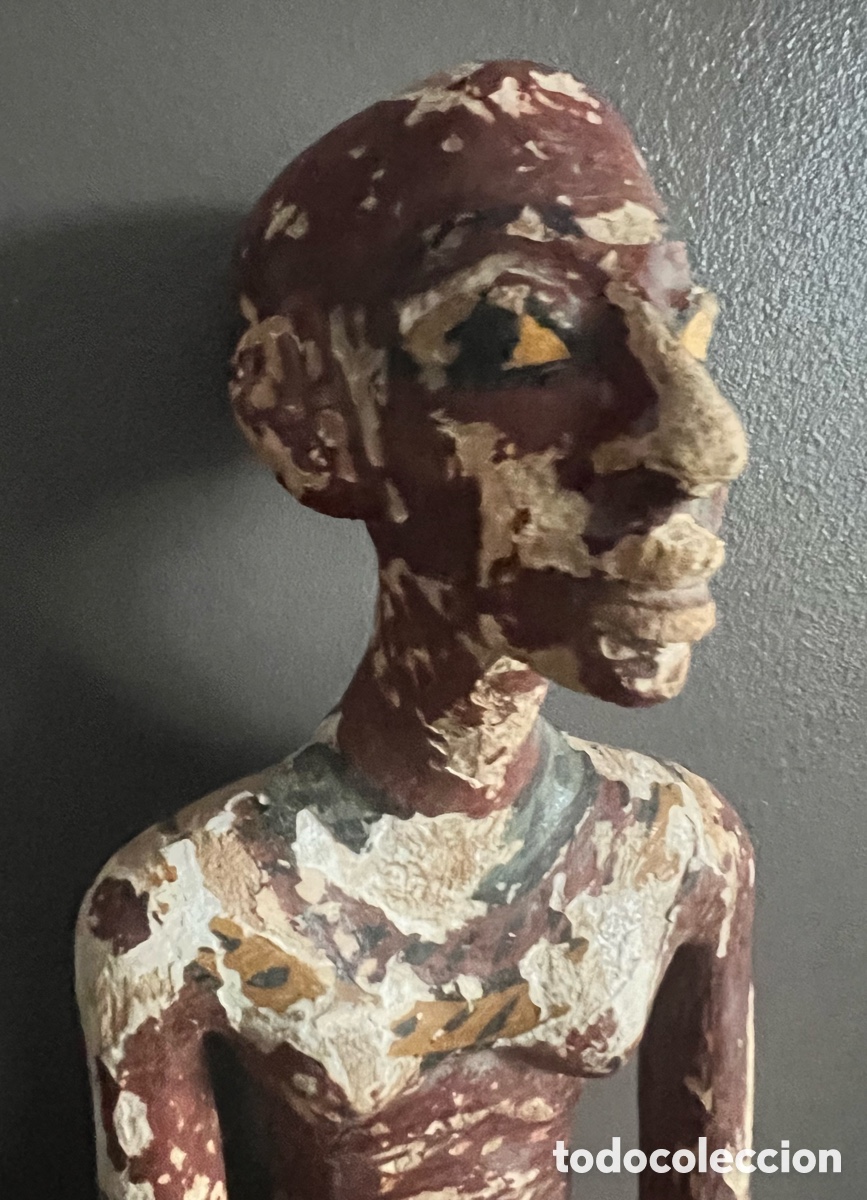
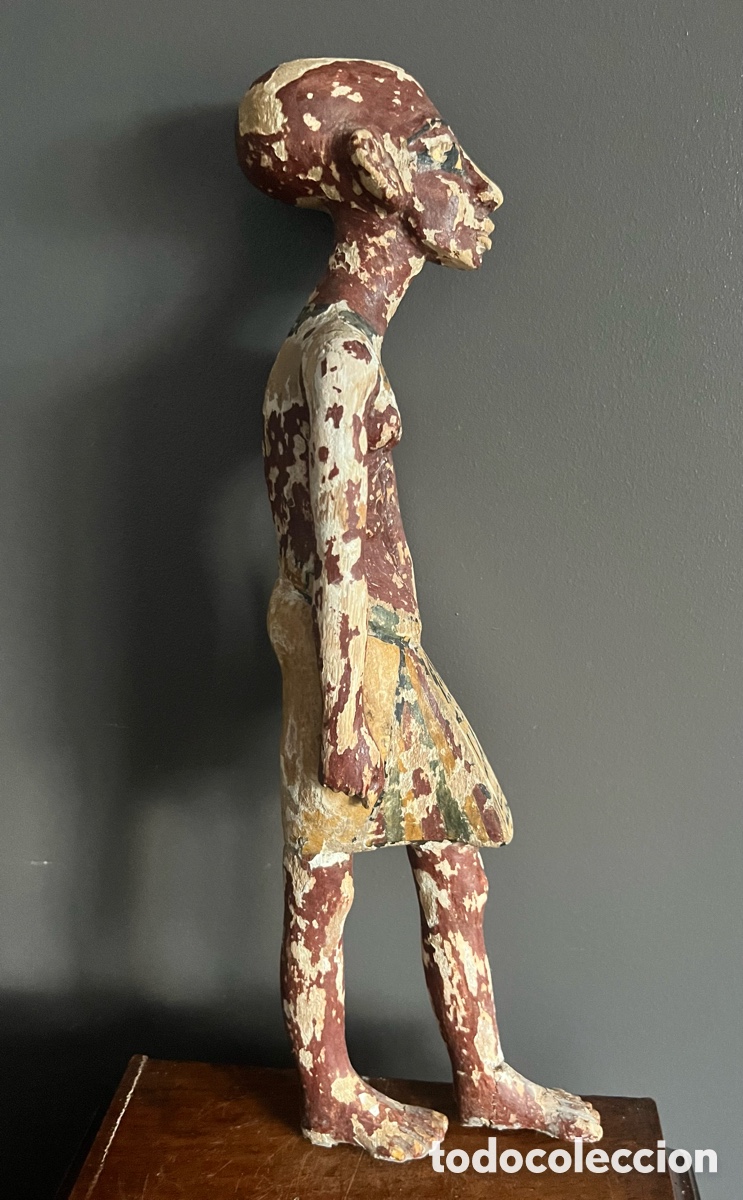
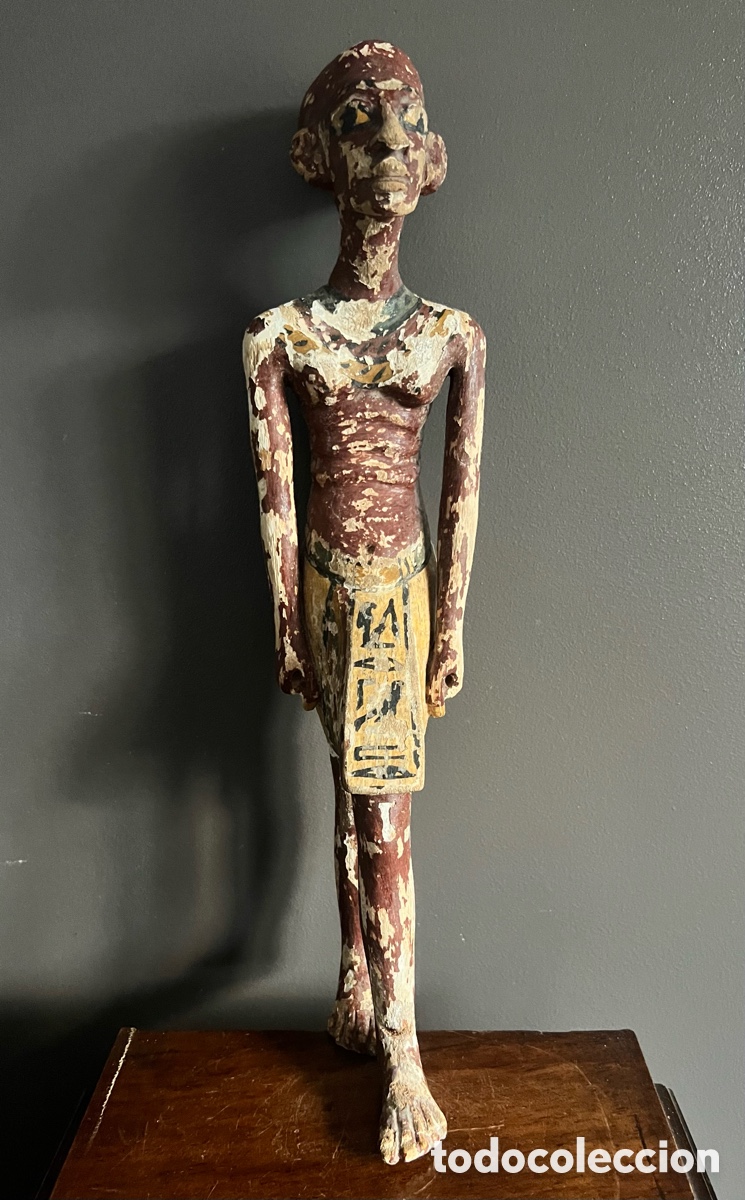
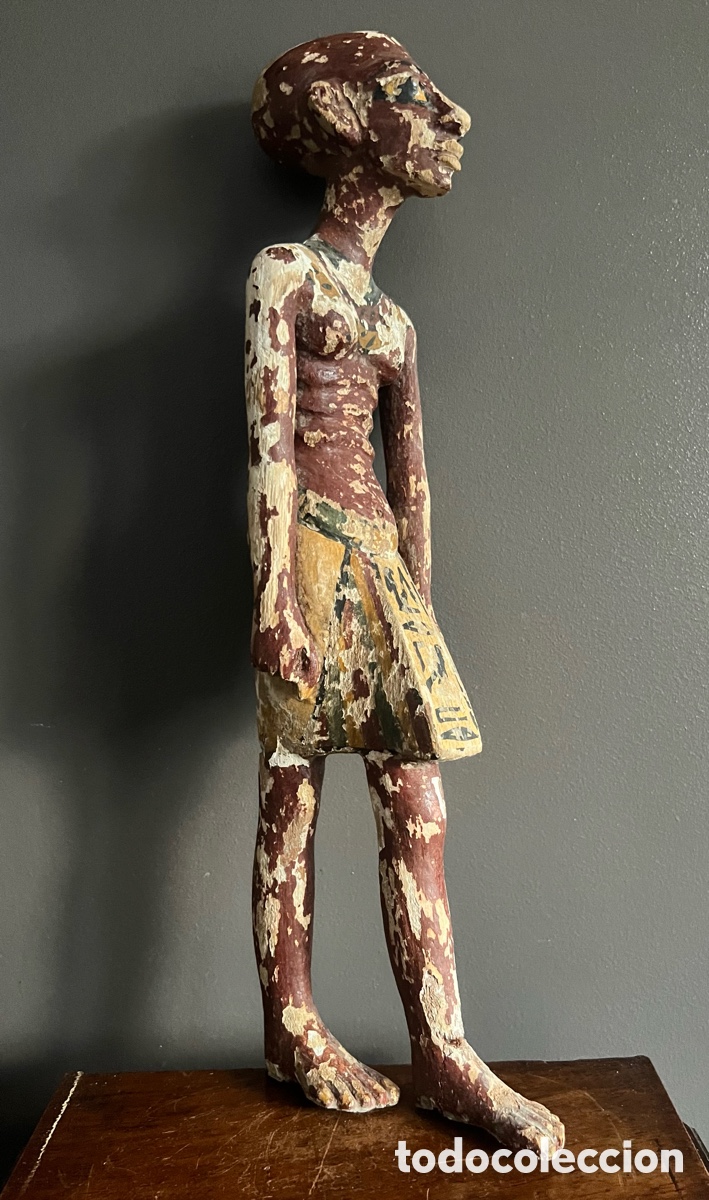
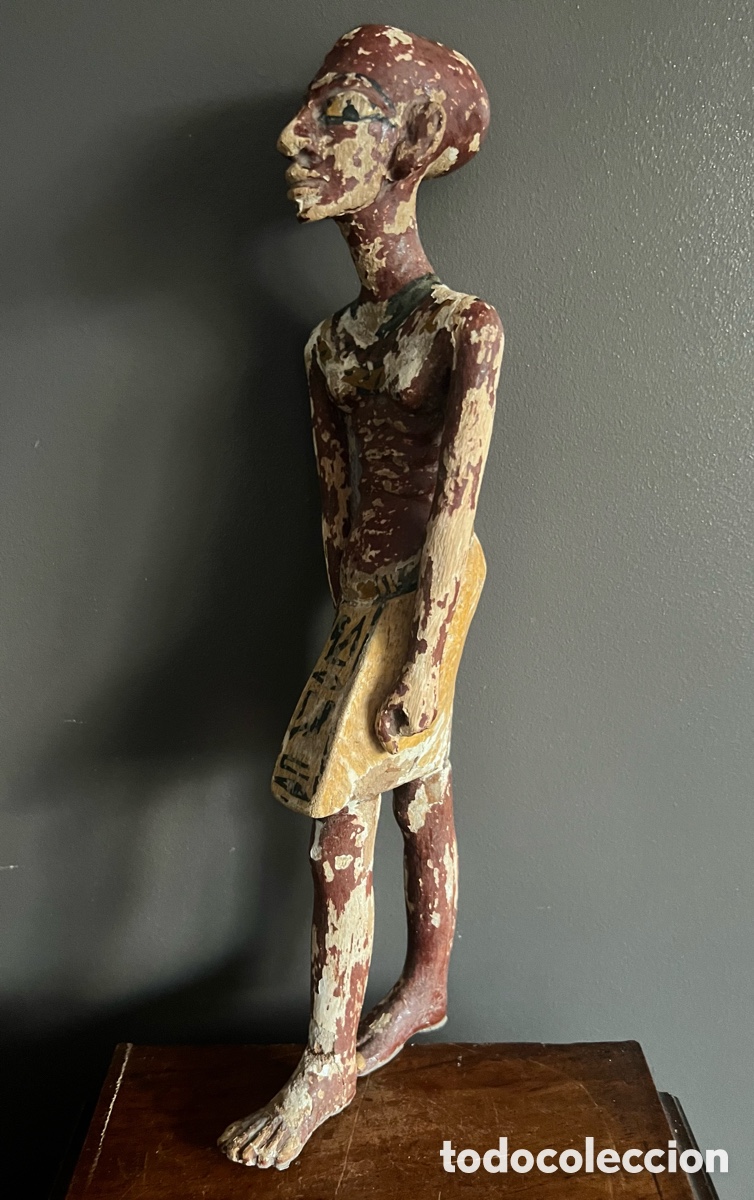
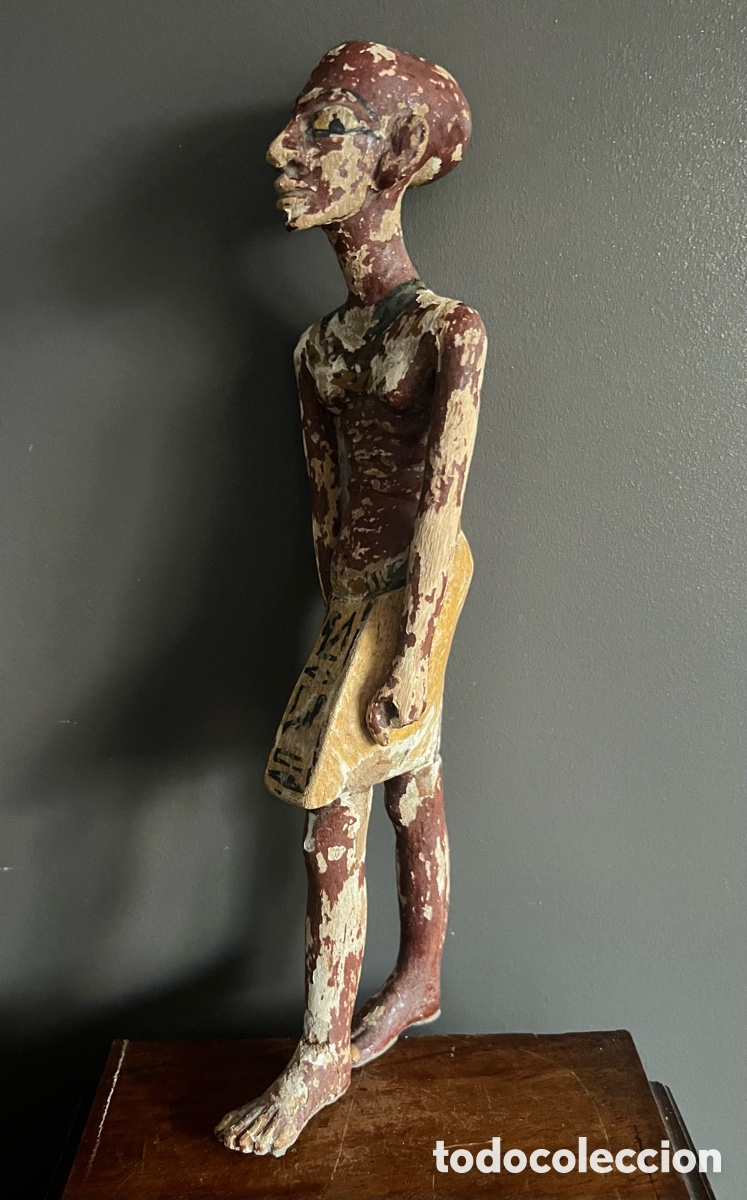
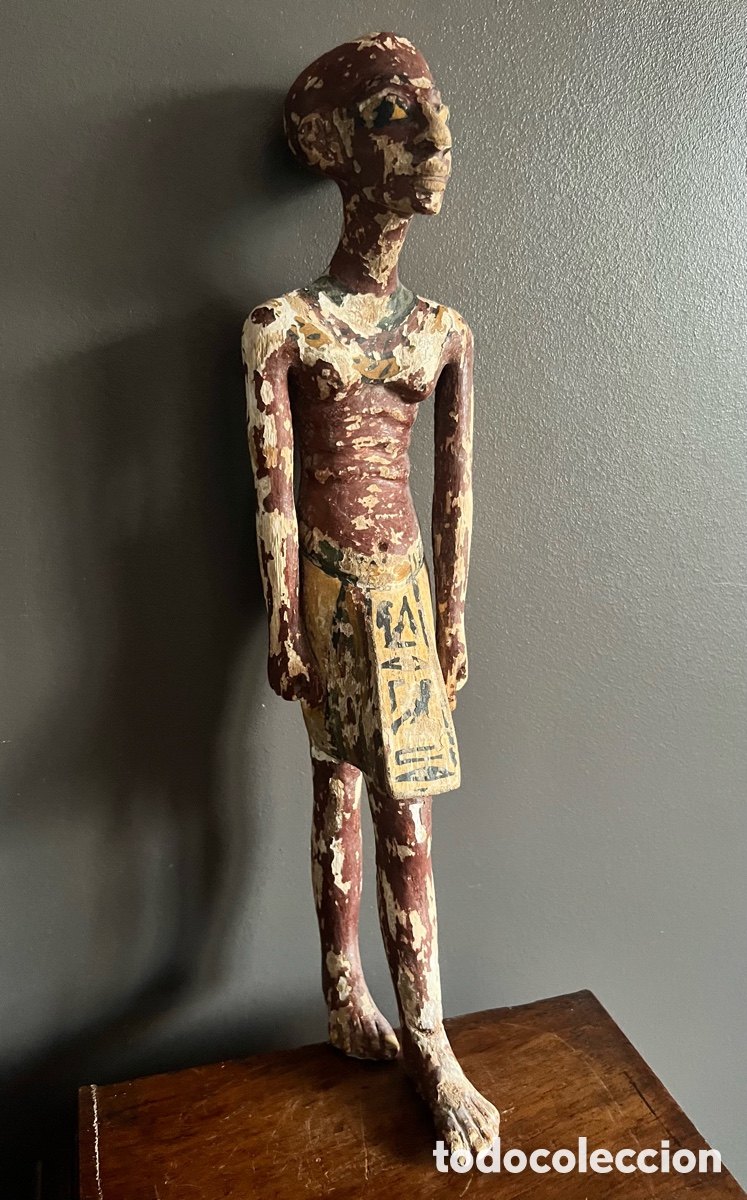
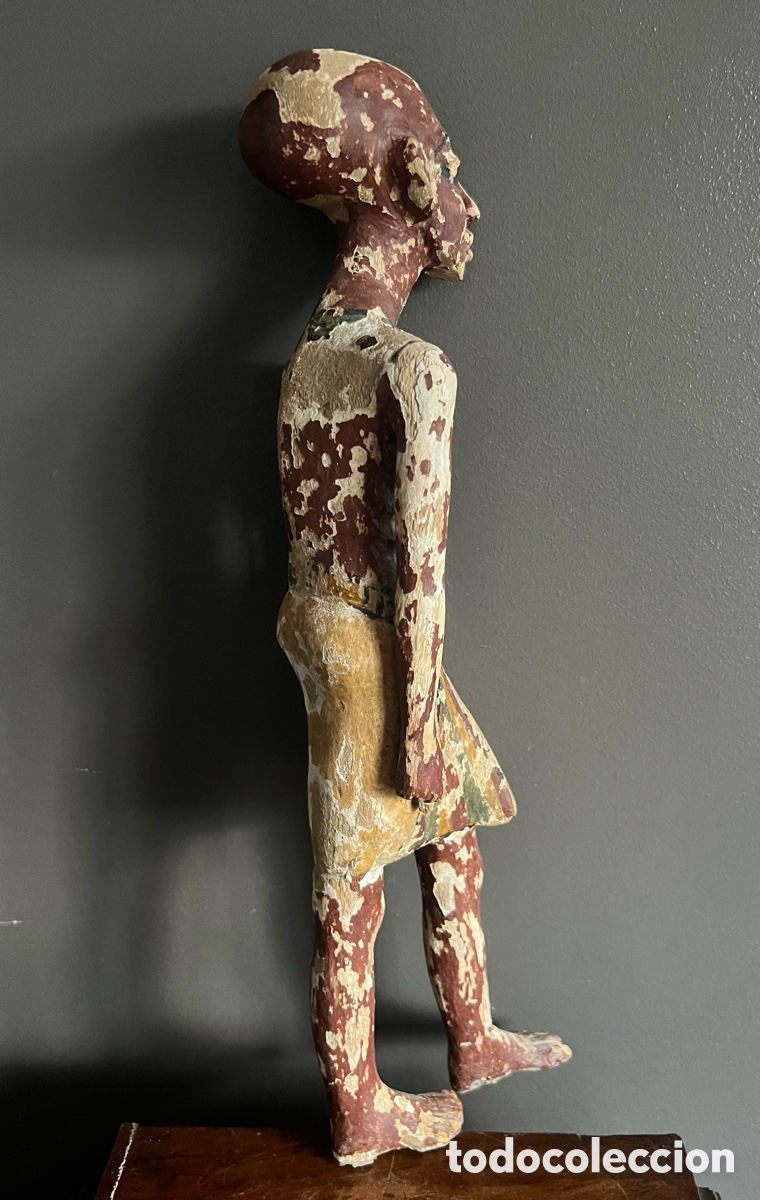
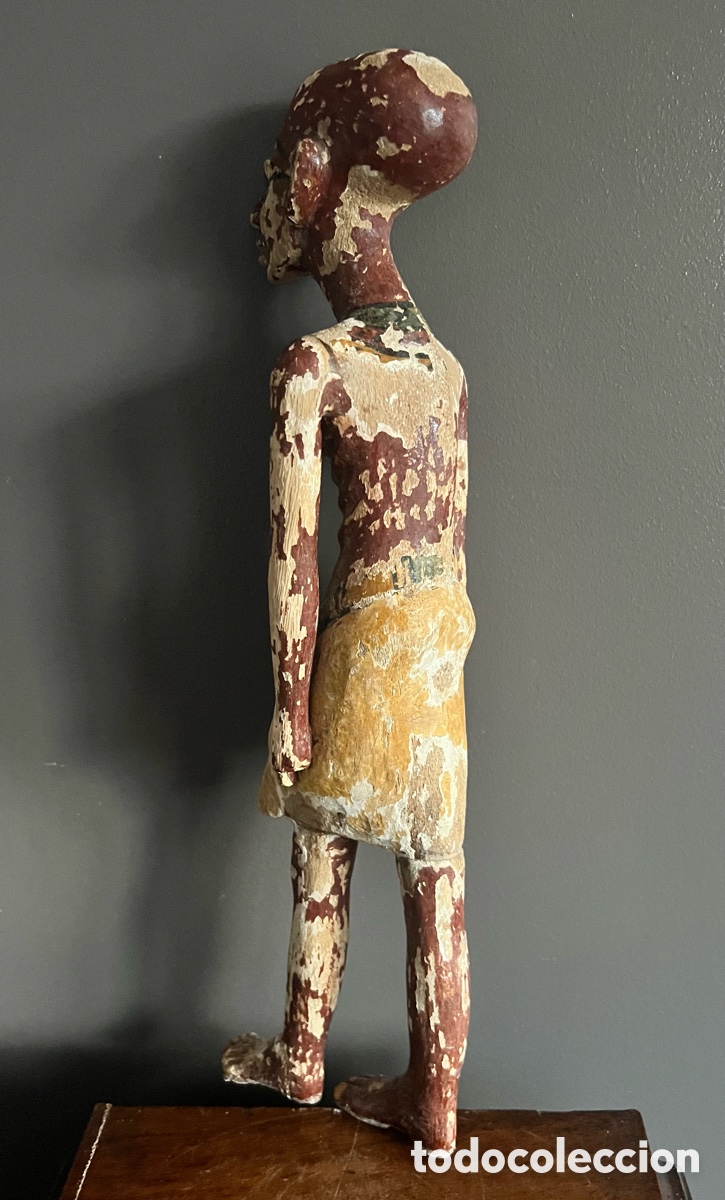
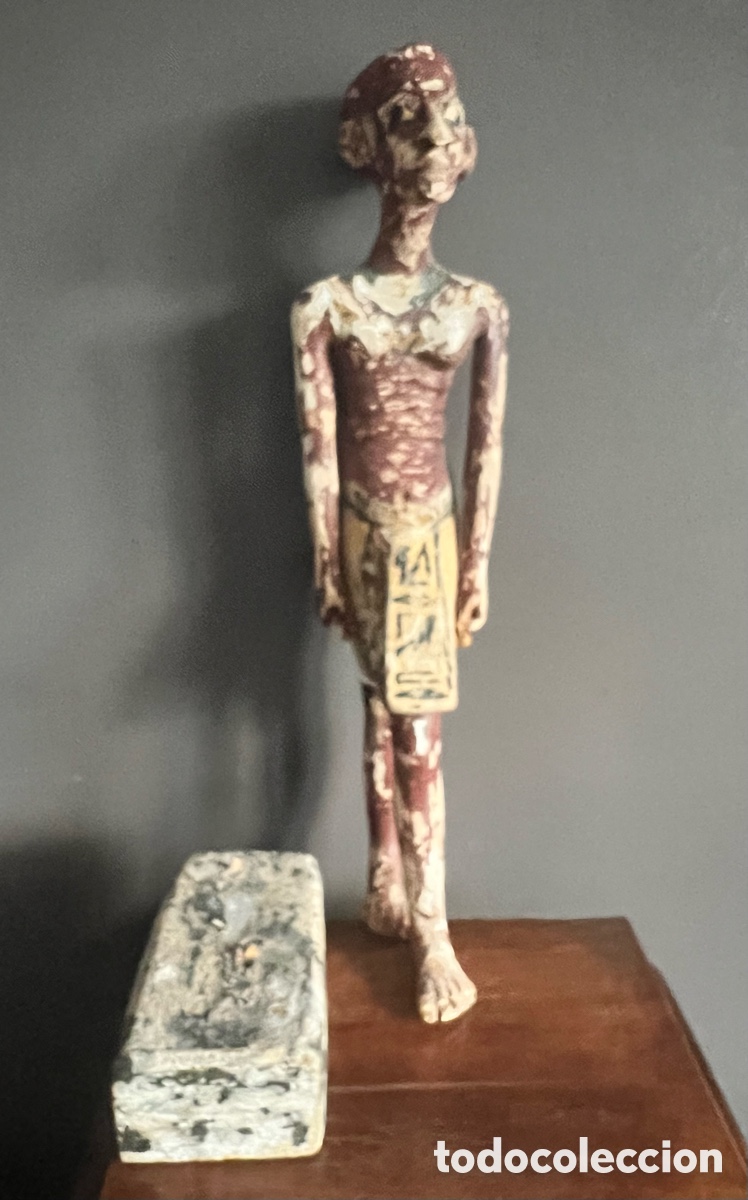
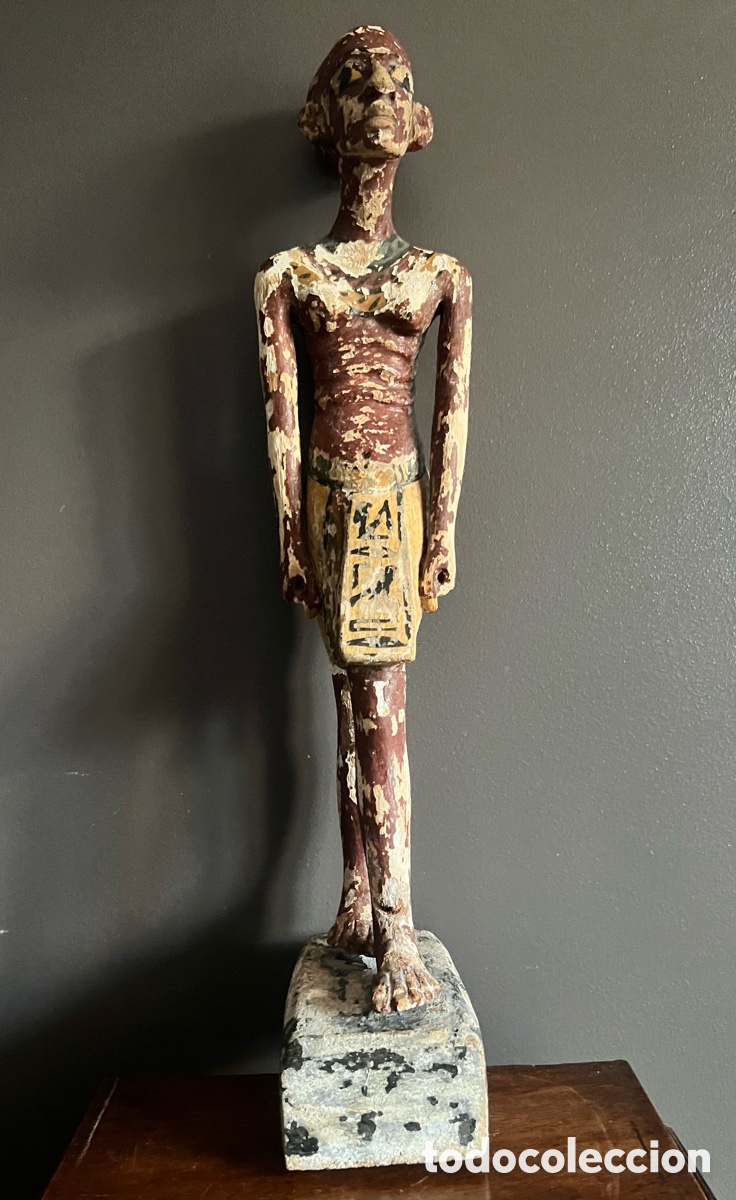
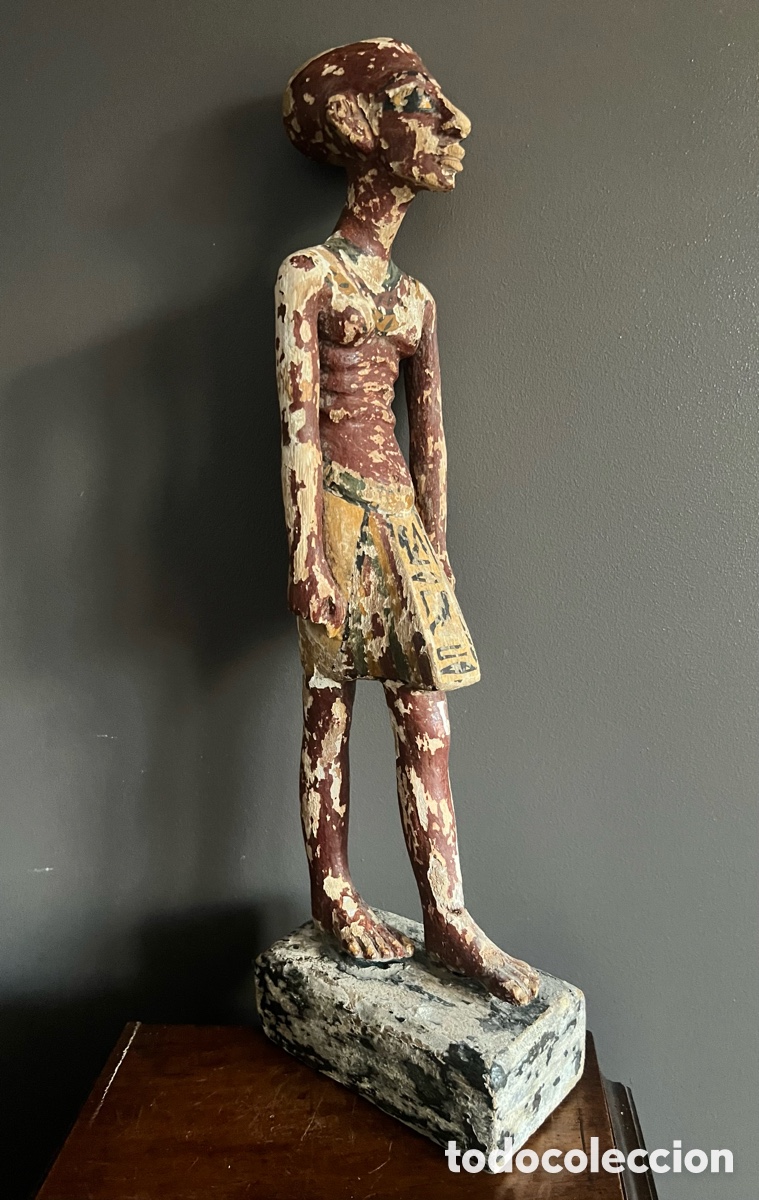
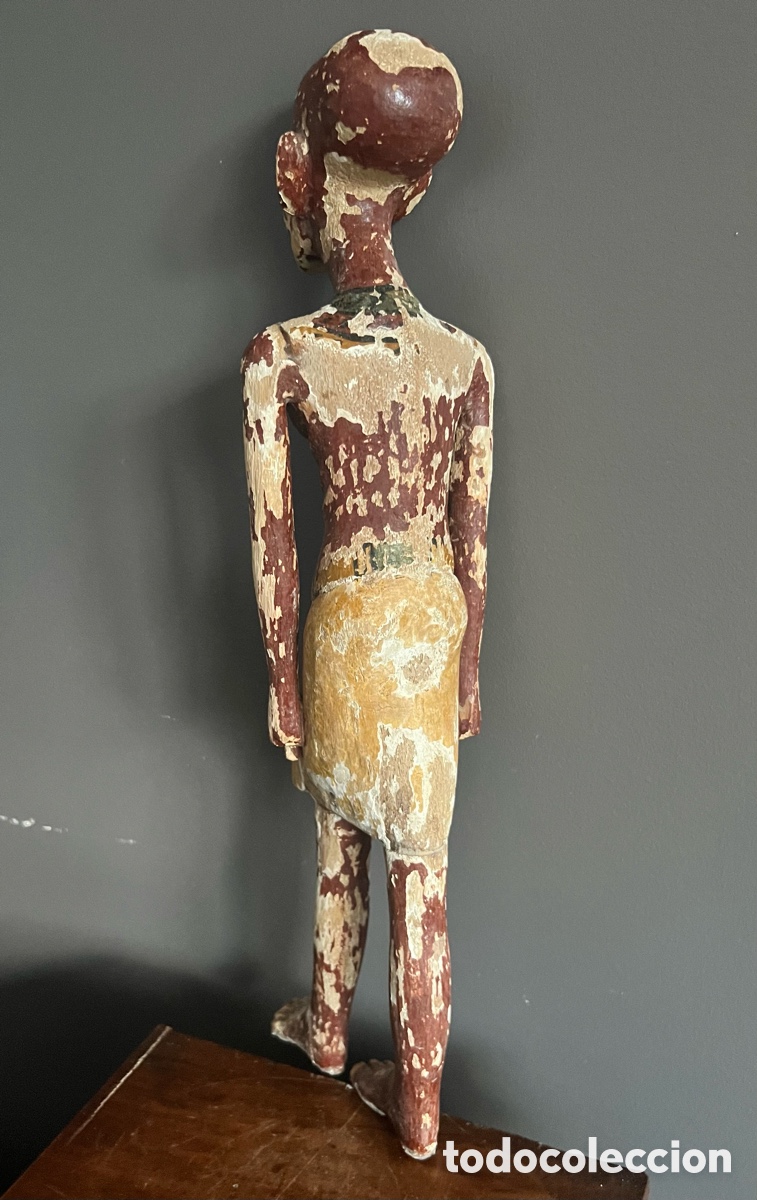
Estatua de sacerdote de la Casa de la Vida
Estatuilla de sacerdote de la casa de la vida
Estatuilla de sacerdote servidor de Amarna
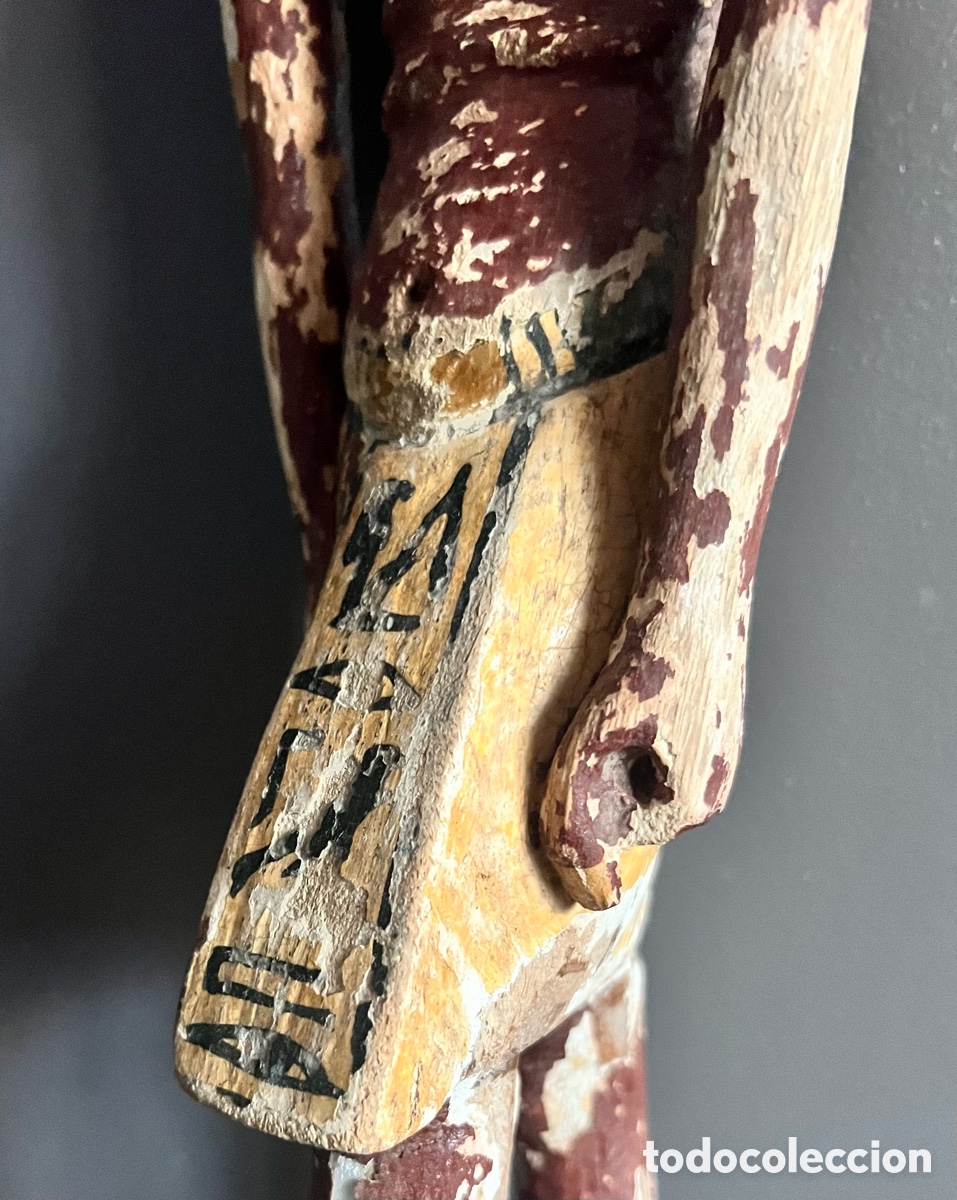
Viste el kilt (falda escocesa)
Medium: madera estucada policromada
Medidas: 50 cm.
Peso: 390 gramos ( madera muy liviana)
Colección Privada
Las acciones del clero egipcio estaban basadas en el culto a los dioses y el ejercicio de otras actividades relacionadas con el ámbito de la religión egipcia como: la magia, la adivinación, la astronomía, las matemáticas, la arquitectura, el baile, la escritura y la medicina.
Pese a la condición de sacerdotes, “representantes” o “intérpretes” de los dioses, los clérigos en el Antiguo Egipto eran ciudadanos egipcios considerados como «servidores de los dioses» y por lo tanto estaban obligados a cumplir los deberes en general de seguir la liturgia de los templos, dar seguimiento a los ritos en diversas situaciones del ámbito egipcio (muerte y enterramientos, fallecimiento de un faraón, ofrendas, procesiones, festivales, etc.), cumplir ciertos deberes y reglas específicas (purificación, ayunos, períodos de abstinencia sexual o de alimentos, etc.) y, en los casos del sacerdocio oficial o de gran influencia, ejercer profesiones y cargos públicos en la administración del reino; ya que ciertos clérigos profesaban labores de sacerdocio y a su vez podían ejercer como médicos, tesoreros reales, escribas, funcionarios en los graneros del estado, guardianes de bibliotecas y templos, maestros, en la gran mayoría de casos, cargos gubernamentales relacionados siempre con el ambiente religioso o en función del aparato religioso de los templos. No todos los médicos, escribas, arquitectos o funcionarios en el Antiguo Egipto eran sacerdotes.
El sacerdote egipcio era un servidor del dios, por lo tanto, su deber estaba en seguir la liturgia del dios en un templo con el objetivo de mantener a la deidad en calma y conseguir su favor para con el pueblo egipcio. Su centro de operatividad estaba por lo tanto en el templo de un dios y, por otro lado, en el palacio del faraón y «las casas de la vida». Estas últimas, centros de enseñanza y bibliotecas.
Previo a todo culto o actividad ritual hacia el dios egipcio, el sacerdote debía tomar un baño ritual. Lo hacía en una alberca, por lo común, ubicada en el patio principal al interior del templo. El objetivo era presentarse limpio ante los dioses y purificar su cuerpo. También los lavados purificadores podían hacerse alternativamente en altares con agua procedente del Nilo al interior del templo. Inmediatamente posterior al baño ritual los sacerdotes se realizaban un enjuage bucal y limpieza dental con natrón (bicarbonato de Sodio) y untaban su cuerpo con aceites perfumados para realizar el correspondiente rito frente al dios.
El culto matinal oficiado por el clero consistía en toda una serie de procedimientos que involucraba comúnmente a un grupo de sacerdotes y consistía en: al amanecer, con los primeros rayos del sol, un grupo de sacerdotes o un sacerdote de forma individual, según el culto pertinente, ingresaba solemnemente a la cámara principal del dios en el templo. Por lo general, esta habitación del dios estaba al final de dicho templo y donde solo tenían el derecho de acceso el faraón y su familia (considerados de origen divino) y los sacerdotes de mayor jerarquía. Sacerdotes menores solo podían acceder a ciertas estancias menores del templo.
Los egipcios de la prehistoria usaban cuero como vestimenta, y en la época del Reino Antiguo, los sacerdotes vestían piel de leopardo como uniforme oficial, junto con un kilt (falda abierta) de la zona del cinturón hacia abajo.
La falda escocesa: una evolución de la falda escocesa, que es una tela envuelta alrededor de la cintura en forma de falda abierta que varía en cuanto a su brevedad, longitud, forma, anchura, pliegues, abalorios y colgantes.
Statuette of a priest from the House of Life
Statuette of a servant priest from Amarna
Wearing a kilt (Scottish skirt)
Medium: Polychrome stuccoed wood
Measurements: 50 cm
Weight: 390 grams (very light wood)
Private Collection
The activities of the Egyptian clergy were based on the worship of the gods and the practice of other activities related to the field of Egyptian religion, such as magic, divination, astronomy, mathematics, architecture, dance, writing, and medicine. Despite their status as priests, “representatives” or “interpreters” of the gods, clerics in Ancient Egypt were Egyptian citizens considered “servants of the gods” and were therefore obliged to fulfill the general duties of following the liturgy of the temples, following the rites in various situations in Egypt (death and burials, death of a pharaoh, offerings, processions, festivals, etc.), fulfilling certain specific duties and rules (purification, fasting, periods of sexual or food abstinence, etc.) and, in the cases of the official or highly influential priesthood, exercising professions and holding public offices in the administration of the kingdom; Certain clerics professed priestly duties and could also serve as physicians, royal treasurers, scribes, officials in state granaries, guardians of libraries and temples, teachers—in the vast majority of cases, government positions always related to the religious milieu or the religious apparatus of temples. Not all doctors, scribes, architects, or officials in Ancient Egypt were priests.
The Egyptian priest was a servant of the god; therefore, his duty was to follow the god's liturgy in a temple with the goal of keeping the deity calm and gaining his favor with the Egyptian people. His center of operations was therefore in the temple of a god and, on the other hand, in the pharaoh's palace and "the houses of life." The latter were centers of learning and libraries.
Before any worship or ritual activity in favor of the Egyptian god, the priest had to take a ritual bath. This was usually done in a pool located in the main courtyard inside the temple. The objective was to present oneself clean before the gods and purify one's body. Purifying washes could also be performed alternatively on altars with water from the Nile inside the temple. Immediately after the ritual bath, the priests rinsed their mouths and cleaned their teeth with natron (sodium bicarbonate) and anointed their bodies with perfumed oils to perform the corresponding rite before the god.
The morning service officiated by the clergy consisted of a series of procedures that usually involved a group of priests. It consisted of: at dawn, with the first rays of the sun, a group of priests or an individual priest, depending on the cult, solemnly entered the god's main chamber in the temple. Typically, this chamber of the god was at the end of the temple and was accessible only to the pharaoh and his family (considered to be of divine origin) and the highest-ranking priests. Lesser priests were only allowed access to certain minor rooms of the temple. Prehistoric Egyptians wore leather as clothing, and during the Old Kingdom, priests wore leopard skin as their official uniform, along with a kilt (open skirt) from the belt down.
The kilt: An evolution of the Scottish skirt, it is a cloth wrapped around the waist in the form of an open skirt that varies in its brevity, length, shape, width, pleats, beads, and pendants.

Espanha (Málaga)


 Español
 English
 Deutsch
 Français
 Português
 Italiano